

THE NAVIGATOR
December 2025

BITCOIN AND BLOCKADES: STRATEGIC AUTONOMY IN A CHANGING INDO-PACIFIC
By Dr. Manali Kumar, Editor-in-Chief at 9DASHLINE
As 2025 draws to a close, the Indo-Pacific has entered a period of “hybrid insecurity”. Traditional military deterrence is now colliding with unconventional drivers — from sovereign digital assets and ecological collapse to the spillover of domestic volatility into regional diplomacy. Great-power competition is becoming a multi-layered reality; regional stability no longer rests on binary alliances, but on the ability of mid-sized nations to secure technological and resource autonomy.
This month’s briefs examine an international order in transition. The dismantling of US development capacity and its withdrawal from global institutions have created a critical void in disaster preparedness and multilateral leadership. In response, China and middle powers like the EU, India, Japan, and Australia are asserting themselves through new strategic partnerships and providing public goods, accelerating a shift toward a multipolar order defined by self-reliance and hedging against US uncertainty.
December has been a masterclass in this volatility. From the assassination-linked protests in Bangladesh to Pakistan’s refugee crisis, internal instability is increasingly bleeding into regional security. While mid-powers like India and South Korea navigate complex alignments with the West and traditional partners, the region is simultaneously grappling with severe ecological pressures and the fallout of a structural economic slowdown in China. In the coming months, the key will be watching how “digital sovereignty” initiatives — such as Bhutan’s crypto-backed development — and the expansion of asymmetric defence networks redefine influence across the Pacific’s physical and digital infrastructure. These trends will determine if the Indo-Pacific can maintain its fragile equilibrium in the coming year.
Check out the latest episode of our podcast, THE BRIDGE, which focuses on the latest ASEAN summit, Timor-Leste’s entry as a full member, and how the landmark EU–Indonesia CEPA is helping transform the region.
As the Indo-Pacific continues to shift, 9DASHLINE delivers the sharp, timely analysis you need to stay ahead of the curve.
Subscribe now
MIDDLE POWERS STEP IN AS GLOBAL GOVERNANCE FRAYS
By Dr. Hunter Marston, Southeast Asia Associate at 9DASHLINE
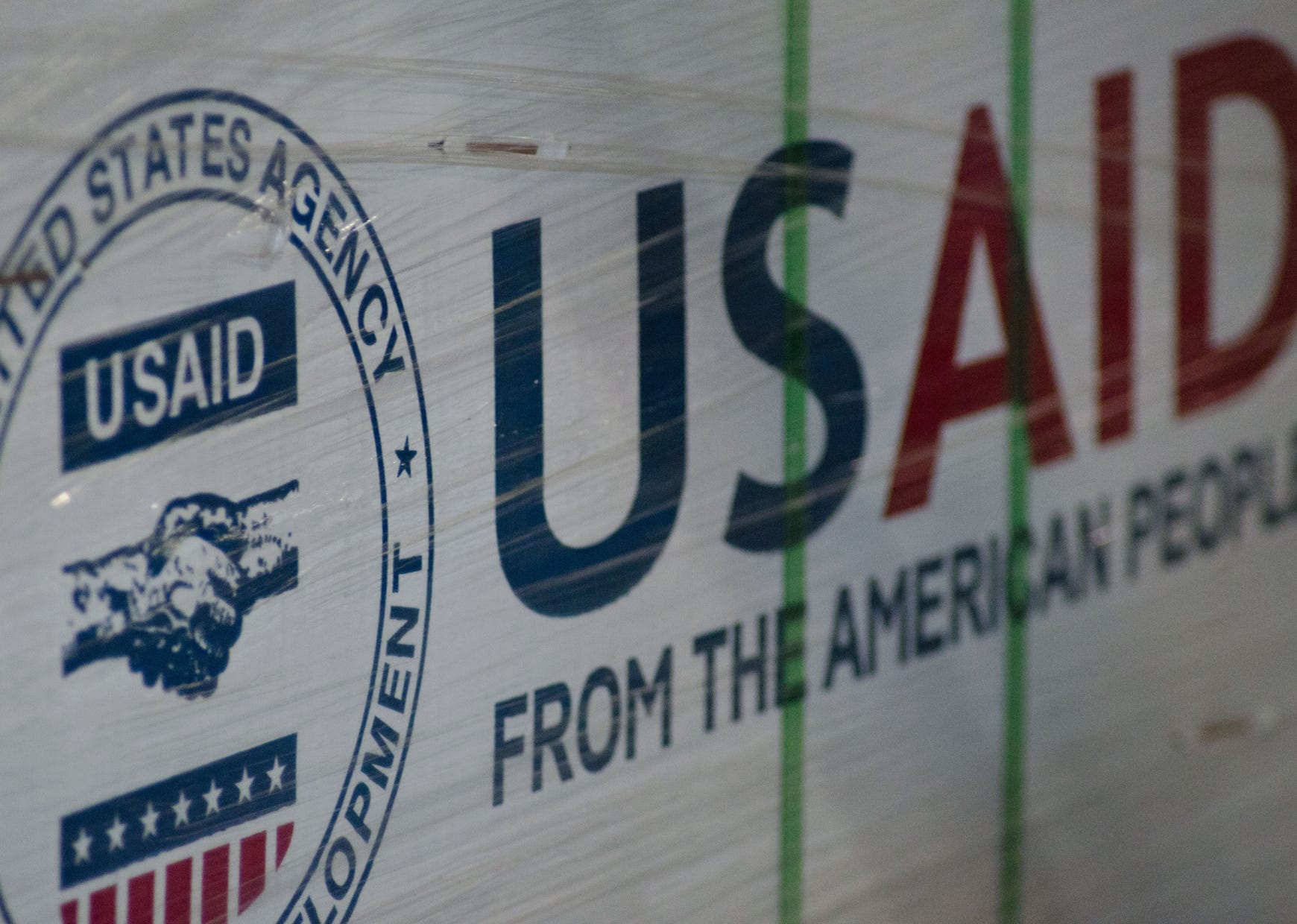
The Trump administration introduced profound disruptions to the international order in 2025. Beyond continued scepticism toward alliances and multilateral institutions, the administration swiftly announced sanctions against the International Criminal Court, withdrew from the Paris Climate Agreement and the UN Human Rights Council, and declared its intent to leave the World Health Organisation. It also terminated the US Agency for International Development (USAID) as part of a larger reorganisation of the Department of State, eliminating a major source of US soft power, and imposed “Liberation Day” tariffs against virtually every country, prioritising a unilateral rebalancing of trade deficits.
Washington’s intensified unilateralism has accelerated middle powers’ efforts to hedge against a disruptive United States. European leaders reaffirmed Greenland’s autonomy and pledged backing for Ukraine amid a wavering US commitment. The European Union concluded a free trade agreement (FTA) with Indonesia and advanced a major trade deal with Mercosur.
Australia responded by expanding development assistance across Southeast Asia and the Pacific, while deepening cooperation with other middle powers through initiatives such as the Australia-Canada-India Technology and Innovation (ACITI) Partnership, focusing on clean energy, critical minerals supply chains, and working to shape standards across advanced industries.
Multilateral institutions are going about business despite an absent United States. The G20 Summit in South Africa proceeded without Washington’s participation, even as Miami prepares to host the 2026 G20 Summit. Malaysia hosted the first ASEAN-China-Gulf Cooperation Council Summit, with Prime Minister Anwar Ibrahim emphasising connectivity across the Global South to bolster the besieged rules-based order.
Beijing has sought to exploit the leadership void by presenting China as a stable and reliable alternative to the United States. Yet economic realities constrain its influence: China’s economy grew less than 3 per cent in 2025, just half of what Beijing projected in official data, while exports slipped due to overcapacity and declining global prices.
Looking ahead, global growth and political stability are far from guaranteed. But these trends suggest that middle powers will continue actively seeking options to diversify and hedge against ongoing uncertainty emanating from Washington.

CLIMATE DISASTERS ARE SHIFTING REGIONAL POWER
By Dr. Manali Kumar, Editor-in-Chief at 9DASHLINE
In late 2025, South and Southeast Asia were battered by a rare ‘multi-peril’ climate disaster as Cyclones Ditwah and Senyar coincided with an unusually intense monsoon. Over 11 million people were affected across Sri Lanka, Indonesia, Thailand, and beyond, with 1.2 million displaced, more than 1,750 deaths, and damages exceeding USD 6–7 billion in Sri Lanka alone. A one-in-300-year rainfall event in southern Thailand underscored the region’s growing vulnerability to extreme climate shocks.
The Trump administration’s early-2025 dismantling of USAID had cascading effects on disaster preparedness, weakening climate-resilience systems just months before catastrophe struck. The crises also revealed a deeper geopolitical shift. Although the Quad has long framed Humanitarian Assistance and Disaster Relief as a core pillar — formalised through the 2022 Quad Partnership on HADR — the late-2025 crises revealed a marked shift in its operational dynamics. With USAID effectively dismantled, the US struggled to provide the logistical backbone that once enabled coordinated humanitarian responses. The Quad, rather than deploying joint naval forces, functioned mainly as a diplomatic coordination platform, while members delivered aid bilaterally — with India emerging as the most visible operational leader.
India’s launch of Operation Sagar Bandhu and its USD 450 million reconstruction package for Sri Lanka signalled a shift from reactive relief to large-scale, infrastructure-first recovery, cementing New Delhi’s leadership in South Asia under its “Neighbourhood First” policy. Japan reinforced its role as the region’s technical backbone, rapidly mobilising grants while deploying JICA expertise in flood management and early-warning systems to fill the void left by USAID’s science-driven programmes. Australia sharpened its Southeast Asia focus by committing over AUD 14 million in humanitarian assistance and support for health and education, positioning itself as a reliable long-term partner.
These responses signal a decisive rebalancing of regional leadership. Australia, Japan, and especially India are stepping into roles once anchored by US-led aid institutions. The retreat of American development capacity has not merely reduced US influence; it has accelerated a multipolar Indo-Pacific, where even close US allies are increasingly compelled to lead on their own. In the wake of Cyclones Ditwah and Senyar, the region is learning that disaster response is now as much about geopolitical clout as humanitarian relief.
ACROSS THE INDO-PACIFIC
South Asia
The most visible diplomatic moment this month was Russian President Vladimir Putin’s high-profile visit to India. Held amid sustained Western pressure over the Ukraine war and renewed US-India tariff frictions, the visit underscored the durability of the Indo-Russian strategic relationship. Discussions focused on energy security, defence cooperation, and trade diversification. However, with no major agreements signed, long-term strategic payoffs remain uncertain. Russia’s growing dependence on China and India’s tightening economic ties with the West have structurally limited the bilateral relationship, even as symbolism and legacy continue to sustain them.
India faced mounting governance and environmental pressures. Large parts of North India, particularly Delhi NCR, experienced prolonged hazardous air quality, prompting renewed public protests and judicial intervention. Tensions rose further after a Supreme Court ruling potentially eased restrictions on commercial activity in parts of the Aravalli mountain range, raising fears of accelerated ecological degradation. Meanwhile, a regulatory standoff with IndiGo, India’s largest airline, over IndiGo’s failure to fully comply with new staff-welfare and safety norms grounded thousands of flights, creating a mobility crisis.
In Bangladesh, the assassination of Sharif Osman Hadi, a prominent youth leader of the 2024 uprising and critic of both Sheikh Hasina and India, triggered violent protests. Mobs targeted pro-India media outlets and the Indian Assistant High Commission in Chittagong, highlighting how anti-India sentiment has become a mobilising force in post-Hasina politics. In parallel, protests in New Delhi over the lynching of a young Hindu man, Dipu Chandra, reignited concerns over minority safety under the Yunus administration.
Sri Lanka faced a different kind of crisis with Cyclone Ditwah devastating large swathes of the island, killing over six hundred, and causing more than USD 4 billion in damage, particularly to agriculture and coastal infrastructure. India moved quickly to position itself as the first responder, with External Affairs Minister S. Jaishankar announcing a USD 450 million relief and reconstruction package.
Pakistan saw major political upheaval as former Prime Minister Imran Khan and his wife Bushra Bibi were sentenced to 17-year prison terms over alleged misrepresentation of gifts. Khan’s party, the PTI, denounced the verdicts as another attempt by the establishment to permanently exclude Khan from politics. Concurrently, Islamabad continued its mass deportation of Afghan refugees, echoing similar expulsions by Iran and raising concerns in the neighbourhood about humanitarian strain and cross-border instability.
Bhutan drew global attention for an unconventional development strategy. Thimphu confirmed that it would deploy part of its sovereign Bitcoin reserves to finance the Gelephu Mindfulness City (GMC), a new special administrative region in southern Bhutan. Leveraging surplus hydropower for state-backed crypto mining, Bhutan has become one of the world’s most significant sovereign crypto holders. Rather than liquidating its crypto holdings, Bhutan plans to use them through collateralisation and long-term treasury management.
Southeast Asia
Renewed fighting broke out between Thailand and Cambodia following an October ceasefire that was always heavy on ‘political theatre’ and light on substance. Thailand launched a wave of cross-border air strikes in response to Cambodian rocket attacks, with both sides exchanging artillery fire, while the Thai Navy imposed a limited blockade, cutting off Cambodia’s access to oil and military supplies.
The clashes prompted urgent diplomatic efforts. US Secretary of State Marco Rubio urged Bangkok to de-escalate, while Chinese Foreign Minister Wang Yi engaged with both capitals. ASEAN Foreign Ministers convened an emergency meeting in Kuala Lumpur on 22 December, with Cambodian Foreign Minister Prak Sokhonn and Thai Foreign Minister Sihasak Phuangketkeow present. Although Malaysia transferred ASEAN chairmanship to the Philippines in October, Prime Minister Anwar Ibrahim has continued to lead regional efforts to resolve the conflict, including a previous ceasefire agreement concluded in July. A ceasefire was agreed in late December, which has largely halted major fighting, with both sides observing the truce and working through confidence-building steps, though tensions remain and no lasting political settlement has yet been reached.
In Myanmar, the military junta held the first phase of elections in 102 townships on 28 December, with subsequent phases scheduled for 11 and 25 January. The junta intensified operations to retake territory lost to resistance groups in the second half of 2025, after Beijing successfully lobbied local armed groups to withdraw from territories they had seized in northern Shan State near the Chinese border. Experts and rights groups have condemned the elections as a sham, warning that any ASEAN recognition could legitimise continued military rule.
Meanwhile, the Philippines has faced scrutiny over possible links to Australia’s recent Islamic State-inspired mass shooting at Bondi Beach in Sydney, which left 15 dead. Australian police are investigating whether the perpetrators, Sajid Akram and his son, Naveed Akram, received any formal military training from Islamic militants during their travel to Mindanao in the southern Philippines in November, where the Islamic State attempted to establish a caliphate in 2017. President Ferdinand Marcos Jr. vehemently rejected any Philippine connection to the attacks.
East Asia
In Taiwan, the Kuomintang (KMT) and Taiwan People’s Party (TPP) have jointly stalled passage of President Lai Ching-te’s proposed USD 40 billion special defence budget. The standoff, compounded by a brewing constitutional crisis over central government revenue allocation, raises doubts about Taipei’s seriousness in strengthening its defence, even as PLA operations around Taiwan become increasingly routine. Meanwhile, the Trump administration moved ahead with a record USD 11.1 billion arms package, prioritising asymmetric, Ukraine-tested systems designed to blunt a Chinese amphibious landing, rather than the prestige platforms historically favoured in Taipei. Less than two weeks after the package was announced, China conducted large-scale military drills around Taiwan, dubbed “Justice Mission 2025”. Taiwanese officials characterised the drills as combining military signalling with a broader “cognitive warfare” campaign aimed at shaping public perceptions and political debate on the island.
South Korea deepened its strategic and defence-industrial alignment with the United States, confirming plans for 2026 negotiations on securing fuel for nuclear-powered submarines, with talks expected to conclude within two years. Seoul also upgraded ties with Laos to a comprehensive partnership emphasising supply chains and development cooperation, underscoring President Lee Jae-myung’s “pragmatic recalibration”: enhancing South Korea’s autonomy through diversification while deepening its alliance with the United States.
In Japan, reports citing an “unnamed security source” in the Prime Minister’s Office as saying that the nation “should possess nuclear weapons” were later dismissed by a senior official, who reaffirmed Tokyo’s non-nuclear stance. Prime Minister Takaichi announced plans to visit the US to meet President Donald Trump in early 2026. Separately, Liberal Democratic Party (LDP) lawmakers continue to make high-level visits to Taiwan, with around 30 expected to visit in late December and early 2026 amid heightened tensions with China.
Estimates from the Rhodium Group suggest China’s economy grew by only about 2.5–3 per cent in 2025, significantly below official targets, while house prices are forecast to fall about 3.7 per cent and with declines expected to extend into 2026. As Michael Pettis has argued, this reflects deeper structural imbalances rather than a cyclical slowdown, pointing to China’s reliance on exports for growth and making rising trade tensions — particularly with Europe — a defining feature of the landscape in 2026.
In Hong Kong, a court found pro-democracy media tycoon Jimmy Lai guilty in a landmark national security trial, underlining the extent to which the territory’s National Security Law has subordinated judicial process to Beijing’s political objectives.
The Pacific
US-China rivalry continues to shape the Pacific security landscape. China’s involvement in rebuilding a strategic WWII runway in Micronesia has heightened US concerns over dual-use infrastructure near Guam, while reports that Beijing has fielded an intercontinental anti-ship ballistic missile with potential reach to the US West Coast reinforce perceptions of a rapidly widening PLA deterrence envelope across the Pacific. In response, the US has combined hard and soft measures: Guam and Hawaii National Guards have strengthened ties with Philippine reservists to improve interoperability, reserve mobilisation and disaster-response coordination. Meanwhile, New Zealand’s Chief of Defence observed search-and-rescue operations near Tokelau and maritime patrols around the Cook Islands, underscoring Wellington’s ongoing security presence in its immediate neighbourhood.
India has deepened its Pacific engagement with Fiji, establishing a defence attaché in Suva, conducting naval port calls, delivering sea ambulances, and providing cybersecurity training, signalling a deepening of New Delhi’s Pacific engagement. Fiji plans to overhaul the Republic of Fiji Military Forces Act to address emerging security challenges, while the president urged unity and institutional consolidation. In Vanuatu, the prime minister survived a no-confidence vote, temporarily stabilising the government’s fragile coalition. New Zealand has also intensified sanctions enforcement against North Korea, deploying HMNZS Aotearoa and P-8A Poseidon aircraft to disrupt suspected illicit maritime transfers, even as Chinese naval vessels closely shadowed its ships. Wellington and Tokyo concluded new defence arrangements on information security and logistics support, signalling closer operational alignment and interoperability, while tensions persist with Samoa over the sinking of HMNZS Manawanui, with calls for the United Kingdom’s role in the event to be examined alongside New Zealand’s response.
Digital and physical connectivity continues to advance across the central Pacific. Kiribati brought Starlink online, expanding connectivity across remote atolls and positioning digital inclusion as a national resilience priority. Nauru signalled the resumption of direct flights with China, further embedding Beijing’s post-reset engagement through transport links and people-to-people channels, while Papua New Guinea advanced Google-backed subsea cable projects announced under the recent Australia–PNG defence treaty, directly linking digital infrastructure to strategic resilience. Canberra framed improved connectivity as critical for secure communication, economic development, and reduced reliance on potentially adversarial networks. The Cook Islands and the European Union agreed on a renewed seven-year sustainable fisheries partnership, granting European vessels limited access in return for financial support targeted at surveillance, fisheries management, and blue-economy development, reinforcing Brussels’ role as a long-term Pacific resource partner.
Climate, migration, and governance challenges remain central across the region. Tuvalu relocated its first group of climate migrants to Australia under a bilateral agreement, while Palau has agreed to accept a limited number of US migrants in exchange for aid, reviving domestic sensitivities around sovereignty and compact-state dependence. In Polynesia, Tonga’s Crown Prince is set to reassume control of foreign affairs and defence portfolios, while the incoming prime minister dismissed speculation over a proposed passport-sale scheme as premature. Public health and governance issues intersect with security concerns in PNG, where the HIV epidemic has deepened amid increasing stigma and cuts to US aid. Meanwhile, France abandoned plans for a 15 March referendum over the future of New Caledonia in favour of renewed talks in Paris, highlighting divisions over the territory’s political trajectory. Finally, the Marshall Islands launched a Universal Basic Income scheme, partly distributed via cryptocurrency, testing novel welfare and digital governance models.
THE BEST OF 9DASHLINE
This month, our top reads take on some of the most pressing strategic and social questions shaping Europe and the Indo-Pacific. From the evolving threat of cognitive warfare to what true progress looks like in political leadership and the substance needed to rebalance EU-India ties, these articles offer empirical insights and forward-looking analysis.
Together, they reveal important opportunities — and risks — for the regions to build resilience against external pressure, distinguish between genuine political progress and symbolic change, and translate strategic ambition into durable partnerships.

COUNTERING COGNITIVE WARFARE: LESSONS FOR THE EU FROM TAIWAN
Democracies today face a rapidly escalating threat from cognitive warfare — disinformation and manipulation aimed at eroding trust, polarising societies, and undermining democratic institutions. Jia Yin Chen (formerly SIPRI China and Asia Security Programme) and Luc van de Goor (Stockholm International Peace Research Institute) draw on Taiwan’s experience as the world’s most targeted democracy, where social media platforms are arenas for foreign influence operations that aim to shape public perceptions and elections.
The article lays out how Taiwan blends rapid fact-checking, whole-of-government coordination, and civic resilience to counter these threats without resorting to censorship. Turning to Europe, the article assesses how the EU has approached cognitive warfare primarily through regulatory instruments such as the Digital Services Act and platform governance, arguing that these measures must be complemented by faster response mechanisms and greater societal engagement to be effective.
FIRST FEMALE PRIME MINISTER IN JAPAN: SYMBOL OF PROGRESS OR STATUS QUO?
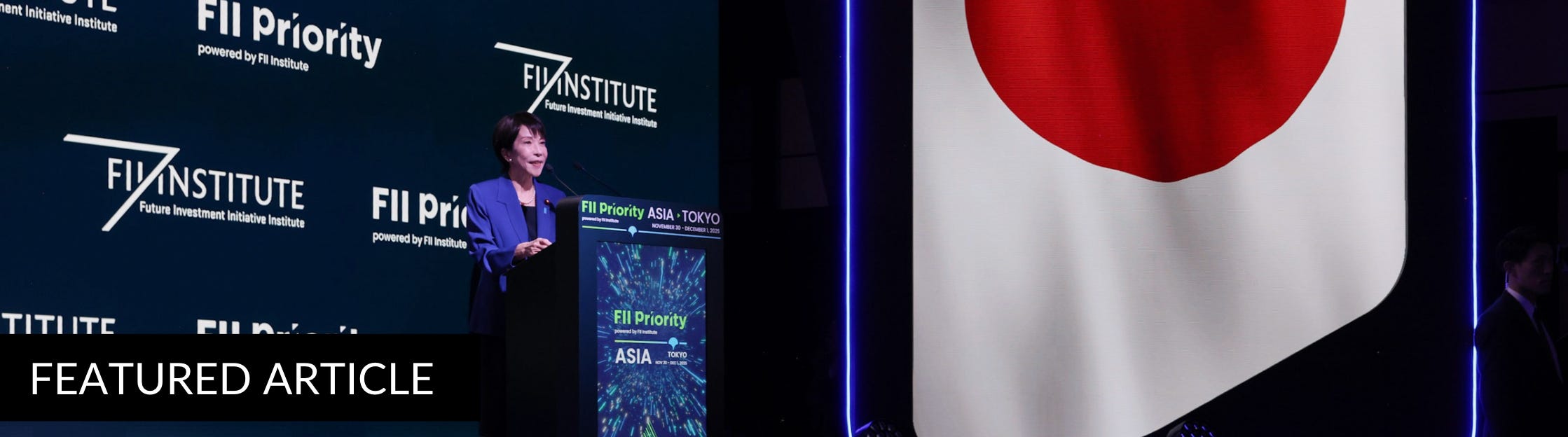
Federica Cidale (Central European Institute of Asian Studies) examines the appointment of Sanae Takaichi as Japan’s first female prime minister and questions whether this historic milestone signals meaningful political change. While Takaichi’s appointment breaks a long-standing gender barrier in Japanese politics, the article situates her leadership firmly within the country’s conservative structures and policy traditions.
The analysis highlights how Takaichi’s positions on security, historical memory, gender questions, and China are rooted in strategic assertiveness, conservative values, and patriotism. The piece argues that symbolic breakthroughs can coexist with political continuity, raising questions about what genuine progress in leadership — and gender equality — really entails.
FAIR AND BALANCED EU–INDIA RELATIONS: WHAT MUTUAL BENEFIT REALLY REQUIRES
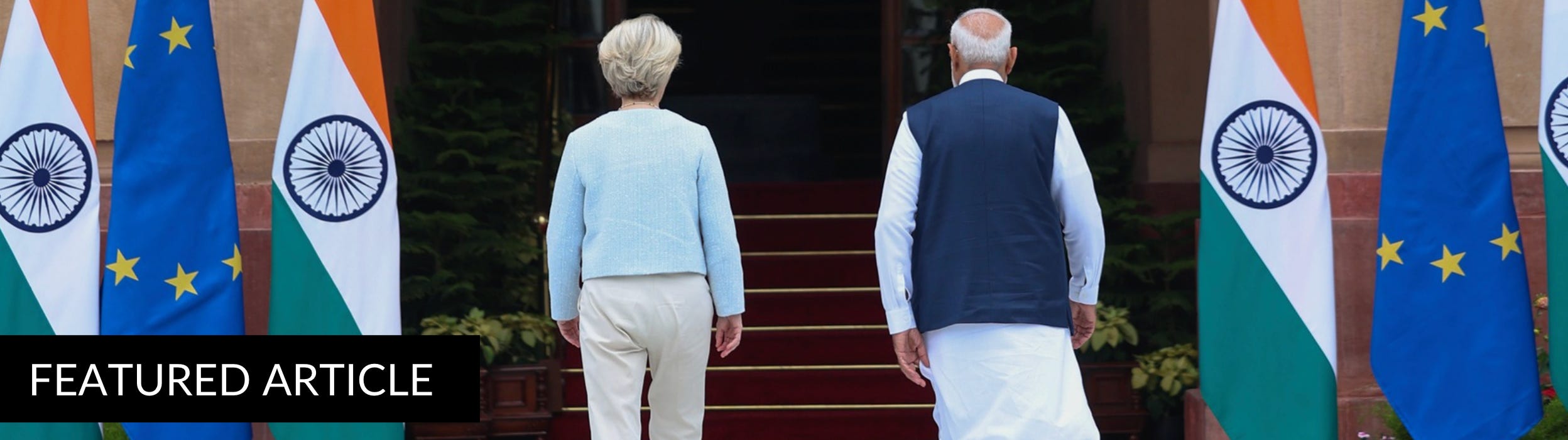
Stefania Benaglia (EU foreign policy advisor) explores the state of EU-India relations at a moment of renewed attention, arguing that calls for a “balanced” partnership must be grounded in realism and reciprocity. As both sides seek to deepen cooperation amid shifting global power dynamics, the article questions what mutual benefit should look like beyond diplomacy and symbolic alignment.
Focusing on economic ties, political trust, and long-term engagement, the piece argues that a stronger EU-India partnership will depend on sustained investment across institutions, businesses, and societies. The EU–India Free Trade Agreement negotiations, the Trade and Technology Council, connectivity initiatives, and cooperation on digital, green, and industrial policy will be key tests of whether strategic intent can translate into a genuinely reciprocal partnership.
CONSULTING SERVICES

At 9DASHLINE, we are your Indo-Pacific experts. We provide sharp and timely analysis on the complex geopolitical landscape of a region brimming with economic and strategic opportunities. Our bespoke consulting solutions empower you to make informed decisions that navigate this dynamic environment.
We welcome your enquiry.
The Navigator is produced by:
Hunter Marston, Daniel McIntyre, Luana Correia, Chetan Rana, Dr Manali Kumar and David MacSweeney.
SUBSCRIBE NOW
HELP US BY SHARING — THANK YOU!
Thanks for reading THE NAVIGATOR ! Subscribe for free to receive new posts and support my work.