

THE NAVIGATOR
MARCH 2026

MARCH MADNESS: FIRE, FUEL, AND FRAGILITY
Written by Dr. Manali Kumar, Executive Director
March delivered another geopolitical shock: a second war in as many months. This time, however, its effects are being felt acutely across the Indo-Pacific, as disruptions in the Middle East have triggered fuel and LPG shortages, exposing the region’s deep dependence on external energy flows. Caught between competing sides, many states are being forced into delicate balancing acts — maintaining non-alignment while safeguarding core economic and security interests. India, for instance, continues to engage all parties, leveraging its position as a partner to each, while Sri Lanka must balance its reliance on the US as its largest export market against Iran, a key buyer of its tea. Meanwhile, reports this week suggest that Pakistan is positioning itself as a potential mediator, drawing on longstanding ties with Tehran, recent diplomatic engagement with Washington, and its own complex security calculus along the volatile Balochistan frontier.
As our region review illustrates, this is not simply a story of crisis, but of constraint. States are seeking to avoid entanglement even as geography, trade, and security commitments pull them closer to the conflict. Pakistan, for example, must manage its sensitive border with Iran while remaining mindful of mutual defence obligations to Saudi Arabia, underscoring the layered risks of escalation. Across the region, governments are improvising — from energy rationing to diplomatic signalling — to navigate a rapidly tightening strategic environment.
Whether this conflict evolves into another protracted US entanglement in the Middle East or remains contained, its effects are already reshaping regional geopolitics. Indo-Pacific states are not merely reacting; they are adapting in real time, reinforcing a broader shift toward pragmatic, interest-driven statecraft in an increasingly fragmented global order.
9DASHLINE delivers the sharp, timely analysis you need to stay ahead of the curve — subscribe today.
IRAN WAR STRESS-TESTS INDIAN DEPENDENCIES IN THE MIDDLE EAST
Written by Dr. Sumitha Narayanan Kutty
Research Fellow, King’s College London and RSIS, Singapore
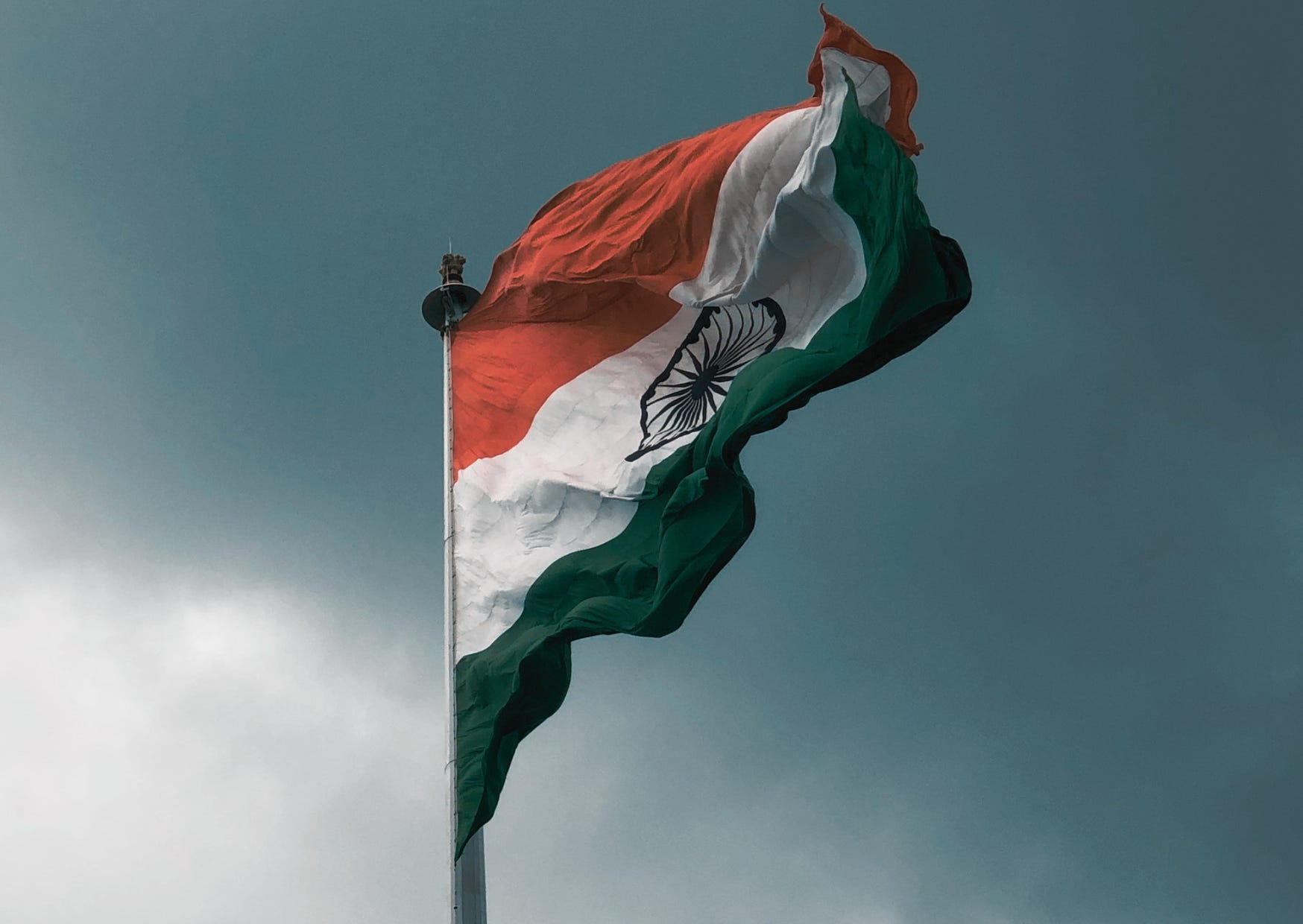
The Iran War has put India’s Middle East policy through the ringer stress-testing its dependencies across the region. Since 28 February, the Modi government’s attention has been dominated by the long-known vulnerabilities: the safety of its nine million-strong diaspora in the Gulf states and the economic fallout from critical energy shortages. What it may not have expected was being caught directly in the fallout when Iranian warships returning from India were targeted by the US without warning off the coast. New Delhi’s non-reaction on the actions of its most trusted security partner in the Indian Ocean confirms it is navigating a difficult position.
India’s Middle East (or West Asia) policy is often labelled a well-rehearsed “balance” between three regional pillars — Iran, the Gulf states and Israel. This framing obfuscates a true reading of its policy direction in the last decade: one fundamentally weighted towards the latter two pillars. It is worth considering whether the Modi government’s choices created dependencies in the Middle East that it may have failed to audit.
To be sure, India maintained strategic ties with Iran throughout the first Trump administration’s “maximum pressure” campaign after exiting the Joint Comprehensive Plan of Action (JCPOA) in 2018. Despite a difficult working relationship with Tehran, Indian objectives were focused on securing interests in its immediate neighbourhood, including stability in Afghanistan and regional connectivity through the North-South Corridor (INSTC). The latter even saw modest Indian investment and gains via Chabahar port.
India’s wider Middle East policy during the same period was making far more significant strides across G2G, B2B, and P2P interactions with Israel and the Gulf states, particularly the UAE. Security alignment received another boost with the normalisation of Israeli-Emirati ties (Abraham Accords) in 2020. Ventures such as the I2U2 (Israel, India, UAE, US) grouping and the India-Middle East-Europe Economic Corridor (IMEC) were born moving at an impressive pace. Between India’s connectivity bets in the region, the IMEC may yet emerge winner but, again, only in a stable region.
The Indian position reveals the complex realities of exercising strategic autonomy as a rule-taker in the current system: its tacit support for two major security partners despite the lack of consultation incurring reputational costs; and its own limited power to influence outcomes as this crisis plays out. What is clear though is that New Delhi will take its cues from Abu Dhabi and Tel Aviv, not Tehran.
ACROSS THE INDO-PACIFIC
South Asia
Clashes between Afghanistan and Pakistan, which have continued since October 2025, appear to have abated with Pakistan announcing a temporary pause in military operations after mediation by China.
In Nepal’s first elections after a Gen Z protest movement toppled its government last year, rapper-turned-politician Balendra Shah and his Rastriya Swatantra Party (RSP) — formed only four years ago — secured a landslide majority in parliament. Read this recent 9DASHLINE article to learn more about what this political reset means for the country, which has struggled with persistent political instability.
Meanwhile in Bangladesh, parliament convened for the first time since the deadly 2024 uprising, with newly elected Prime Minister Tarique Rahman calling for unity. In addition to tackling urgent political and economic problems, the new government must also manage the wider consequences of the Middle East war.
Several countries in the region have implemented measures to reduce fuel consumption as they grapple with worsening energy security — Sri Lanka has introduced a four-day work week, Bangladesh has started Ramadan holidays for universities early after stopping production at several state-run fertiliser plants, and Pakistan has moved schools to remote online teaching. India — the world’s fourth-largest refiner — stepped up its energy diplomacy by supplying diesel to Bangladesh and has received requests from Sri Lanka and the Maldives. Unlike China, India has not banned exports of refined fuels, it is reviewing its fuel exports to ensure availability at home as the crisis continues, and has moved to expand natural gas infrastructure to diversify its fuel supply.
Two Iranian warships docked in India and Sri Lanka after a US submarine torpedoed one of three Iranian vessels in the Indian Ocean just off Sri Lanka’s coast earlier this month. The Iranian ships had been sailing in the Indian Ocean following their participation in India’s 2026 MILAN naval exercises. Sri Lanka resisted US pressure not to repatriate the Iranian crew and survivors, after having previously denied Iran’s request for the ships to make a goodwill visit following the exercises with India. This follows Sri Lanka’s earlier decision this month to decline a US request for two combat aircraft to land at a civilian airport, in order to maintain the country’s neutrality.
Meanwhile, although he met with the ministers of Defence, and Foreign Affairs during his visit to Maldives this week, US Special Representative for South and Central Asia, Sergio Gor, was not granted a meeting with President Mohamed Muizzu. At a press conference this Tuesday, Muizzu declined to engage on the “unjustified” Iran war, and refused any access to Maldivian land or airspace for purposes of any war by any parties. This follows the Maldives’ call earlier this month for coordinated political, economic and diplomatic sanctions against Israel over the war in Gaza at the United Nations Human Rights Council in Geneva. Maldives enacted a law barring entry to Israeli passport holders in April 2025.
Bhutan and India agreed to deepen technology collaboration and have announced a new cross-border remittance initiative linking India’s Unified Payments Interface (UPI) with Bhutan’s postal network through the Universal Postal Union (UPU) PosTransfer system to enhance financial connectivity. Bhutan also reaffirmed its commitment to deepening bilateral ties with Japan during talks marking the 40th anniversary of diplomatic relations, with Japan pledging expanded support for Bhutan’s development, including healthcare infrastructure, AI and digital initiatives, and private investment.
Meanwhile, Druk Holding & Investments has offloaded over USD 110 million in Bitcoin in 2026 which signals a shift from accumulation to strategic liquidation aimed at converting digital reserves into funding for domestic infrastructure, including the Gelephu Mindfulness City project. The move signals a maturing model of “digital sovereignty” in which a small state leverages hydro-powered crypto mining to build reserves and then deploys them for development, positioning Bhutan as a potential template for Global South economies seeking financial autonomy beyond traditional aid and capital markets.
Southeast Asia
The region has been convulsed by rising energy costs as a result of tensions in the Middle East and the closure of the Strait of Hormuz. More than 80 per cent of the oil and gas that passes through the strait transits to Asia, with Singapore and Thailand particularly dependent on imported fuel. Many governments already struggle with high fuel subsidies to keep oil and gas prices low for consumers. They are now scrambling to deal with the strain of higher prices at the pump, which have triggered popular unrest within the living memory of Southeast Asian leaders, including Indonesia in 1998 and Myanmar in 2007.
ASEAN convened an emergency meeting of foreign ministers on 13 March to discuss the ongoing conflict in Iran. The resultant statement “expressed serious concern over the escalation of conflict in the Middle East following the attacks initiated by Israel and the United States against the Islamic Republic of Iran” and “called on all countries to respect international law, including the Charter of the United Nations”. Separately, Indonesian President Prabowo Subianto offered to travel to Tehran to mediate the conflict, though the offer was met with a mix of confusion and ridicule.
Earlier in the month, South Korean President Lee Jae Myung visited the Philippines and Singapore to deepen economic ties in Southeast Asia. In Singapore, Lee and Prime Minister Lawrence Wong agreed to start negotiating a free trade agreement between the two countries and expand cooperation in artificial intelligence (AI) and nuclear energy. Nuclear energy and AI also came up in Lee’s meeting with Philippine President Ferdinand Marcos Jr. in Manila.
Myanmar’s lower and upper houses of parliament convened on 16 and 18 March, respectively, following widely criticised elections in December and January. Unsurprisingly, both houses elected speakers from the military’s Union Solidarity and Development Party (USDP), which dominated the unfree and unfair elections. The parliament will begin the process to choose a new president on 30 March, according to Myanmar officials. Most analysts expect Commander-in-Chief Min Aung Hlaing to become president, a position he has coveted for years. However, per the military’s 2008 Constitution, Senior General Hlaing must first step down from his position atop the armed forces to assume the presidency.
East Asia
Japan’s Prime Minister Sanae Takaichi visited Washington, with the meeting widely seen as a success, avoiding an uncomfortable confrontation over the Strait of Hormuz and keeping the focus on trade and deeper bilateral cooperation as Tokyo positions itself for a larger security role within the alliance. The two sides announced expanded economic coordination, including up to USD 73 billion in Japanese investments in US projects, as well as agreements on shipbuilding, advanced technology and critical mineral supply chains. Japan also committed to increasing purchases of US energy, including Alaskan crude.
China released its new Five-Year Plan, showing it has locked in a security-first economic model. The plan prioritises technology and industrial capacity over household consumption, risking intensified trade frictions with partners such as the EU that are already grappling with widening trade imbalances. Trump postponed a planned March visit to China amid the Middle East crisis, with reports suggesting Chinese officials were frustrated at the lack of preparation on the US side. However, with an eye on Taiwan, Beijing is unlikely to view US distraction in another Middle Eastern conflict as unwelcome. Separately, the US intelligence community assessed that China is not currently planning to invade Taiwan in 2027 and continues to prefer achieving unification without military force.
North Korea fired more than ten ballistic missiles during US-South Korea drills and separately tested cruise missiles from a new destroyer. Kim Jong Un used a speech at the Supreme People’s Assembly to entrench the country’s nuclear status as permanent and ramp up rhetorical hostility towards Seoul. South Korea, by contrast, was exposed to external economic shocks, as the Middle East war hit its energy-dependent economy, testing President Lee’s progressive agenda, while driving market volatility and a sharp fall in the won, prompting Lee to launch an energy-saving campaign.
In Taiwan, the legislature’s National Defence Committee finally began reviewing President Lai’s USD 40 billion eight-year special defence procurement bill, after it had been blocked for four months by opposition lawmakers from the Kuomintang (KMT) and Taiwan People’s Party (TPP). The committee will also consider KMT and TPP proposals totalling roughly USD 12 billion and USD 13 billion, respectively. It remains unclear how much of the budget will ultimately be approved, but with the KMT leadership seeking a more China-friendly direction, efforts to scale back defence spending risk deepening divisions within the party, while placing it on a collision course with Washington, with broader implications for Taiwan’s security.
The Pacific
Papua New Guinea and Bougainville authorities are under increasing pressure to map out concrete post-referendum pathways — including revenue sharing, constitutional arrangements, and policing responsibilities — as negotiations over Bougainville’s overwhelming 2019 independence vote remain stalled. Port Moresby’s recent gun amnesty has revealed the scale of weapons proliferation linked to electoral financing and tribal conflict. In the Solomon Islands, the speaker of the parliament has called for cross-party dialogue to avoid institutional paralysis. External scrutiny is growing over Beijing’s expanding influence in the country’s fragile media sector, where concerns centre on ownership pressures and editorial alignment.
Vanuatu has received 4.5 million vatu from China to support communities affected by increased volcanic activity, reinforcing patterns of targeted Chinese disaster assistance. In a meeting with China’s Special Envoy to the Pacific Island Countries, Qian Bo, Fiji PM Rabuka reaffirmed Suva’s commitment toward deepening bilateral cooperation with Beijing. Suva recently hosted leaders from Wallis and Futuna as it works to strengthen subregional ties. Tonga recently signed a cooperation arrangement with the United States on deep-sea mineral development, highlighting environmental concerns over regulatory capacity and seabed governance, while also facing broader regional pressure from surging global oil prices. Pacific governments are seeking external financial support to manage acute dependence on imported fuel.
Samoa has increased security around the Manawanui wreck site to control access and safeguard sensitive material. Separately, Apia concluded an agreement with Tonga and New Zealand to enhance customs, intelligence-sharing, and border enforcement cooperation, while Tokelau faces a proposed referendum on selfgovernment later this year. Niue has formally approved Starlink as a temporary national internet provider to address persistent connectivity failures during infrastructure upgrades. The Marshall Islands is set to connect to Google’s Hālaihai subsea cable linking Guam and Australia, significantly improving bandwidth resilience and reducing reliance on satellite services.
In the North Pacific, the United States is advancing a new phase of military expansion in the Northern Marianas, including the development of new infrastructure and training operations on Tinian. Proposed large-scale war games are drawing criticism from local leaders over land use, environmental impact, and insufficient consultation. Washington continues to institutionalise security cooperation with Palau through formal interagency dialogue mechanisms to align defence, law enforcement, and maritime surveillance.
Australia has intensified its regional engagement, with Foreign Minister Penny Wong announcing expanded funding and cooperation with the Federated States of Micronesia across maritime security, climate adaptation, and infrastructure. Canberra and the European Union finalised a trade agreement focused on building alternative rare earth supply chains to reduce dependence on China. This comes amid domestic polling indicating nearly half of Australians expect a foreign military attack within five years, and continued operational integration with the United States most notably highlighted by news that Australian personnel were embedded on a US submarine as it recently sank an Iranian warship.
In the French Pacific, elections in both French Polynesia and New Caledonia delivered significant victories for pro-France parties, consolidating Paris-aligned political blocs ahead of future status negotiations. New Zealand Deputy PM Winston Peters held informal talks with Cook Islands PM Mark Brown in Auckland but failed to resolve disputes over the Cook Islands’ autonomous foreign policy decisions, particularly its expanding engagement with China, underscoring tensions within the constitutional relationship. Wellington is moving to expand the use of drones across its military for surveillance, reconnaissance, and logistics, while exploring a rocket-powered spaceplane concept integrated with naval radar systems to enhance maritime domain awareness, signalling a shift toward space-enabled defence capabilities. Finally, Wellington is seeing a renewed focus on Māori electorates, which is shaping debate over representation, electoral balance, and the formation of future coalitions.
THE BEST OF 9DASHLINE
This month’s top reads examine how political transitions, strategic ambiguity, and great-power competition are reshaping governance and regional dynamics across the Indo-Pacific. In Indonesia, Omar Rasya Joenoes explores how mounting grey-zone pressure from China in the North Natuna Sea is testing Jakarta’s long-standing balance between legal clarity and diplomatic restraint. Meanwhile, a multi-author analysis unpacks the evolving strategy of the US under Donald Trump, highlighting tensions between restraint, burden-sharing, and continued engagement in the Indo-Pacific.
Elsewhere, domestic political trajectories reveal how power is being consolidated and contested. In Cambodia, Vanly Seng argues that Hun Manet’s reform agenda masks a deeper continuity of patronage, lawfare, and elite control rooted in the legacy of Hun Sen. In Nepal, Omkar Bhole examines how a youth-driven political reset is reshaping domestic governance and the terms of engagement with external actors like India and China.
Together, these articles highlight how states are recalibrating both internal governance and external strategy in response to shifting political expectations and strategic pressures. Ultimately, they point to a common question: how governments balance continuity and change while maintaining public trust and effective partnerships.
THE GREY-ZONE OF INTEREST: HOW CHINA TESTS INDONESIA’S SOUTH CHINA SEA STRATEGY
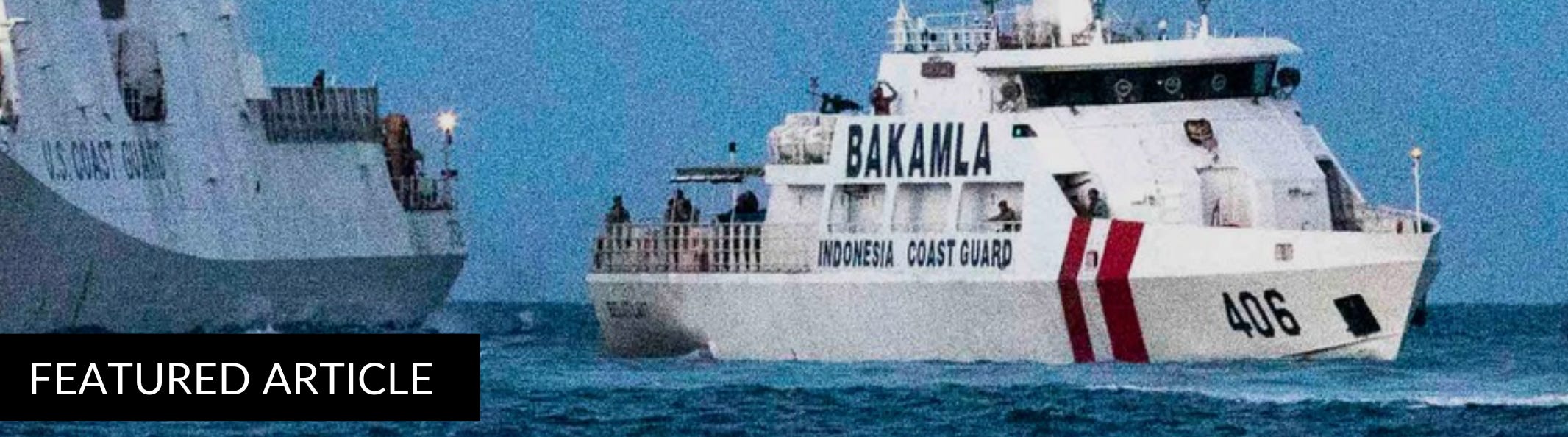
Under mounting pressure from China’s grey-zone tactics in the North Natuna Sea, Indonesia’s long-standing strategy of legal clarity and diplomatic restraint is being challenged. Omar Rasya Joenoes explores how Beijing’s use of civilian fleets, coast guard patrols, and diplomatic signalling is testing Jakarta’s ambiguous posture, particularly under President Prabowo Subianto, while raising concerns over sovereignty and regional stability.
Joenoes argues that Indonesia’s reliance on strategic ambiguity — balancing economic interdependence with China against the defence of its Exclusive Economic Zone — is becoming increasingly untenable. Recent cooperative gestures and evolving bilateral mechanisms risk diluting Jakarta’s principled stance, potentially enabling China’s incremental advances without overt confrontation. This reflects a broader pattern in which grey-zone tactics exploit gaps between diplomacy and enforcement.
To counter this trajectory, Indonesia may consider various strategic responses, including reinforcing legal consistency, enhancing maritime enforcement capabilities, and leveraging its geographic position along critical sea lanes such as the Malacca Strait. While each option carries trade-offs — ranging from escalation risks to economic repercussions — the central challenge lies in transforming ambiguity into a coherent and proactive strategy. Indonesia’s ability to institutionalise such an approach will determine whether it can preserve sovereignty while maintaining flexibility in the face of China’s grey-zone tactics.

RESTRAINT OR RECALIBRATION? US STRATEGY IN THE INDO-PACIFIC
Debates over Trump’s “America First” doctrine have raised questions about whether the US is turning inward or simply redefining its global role. While recent strategy documents emphasise “restraint” and the avoidance of foreign entanglements, operations in Iran and Venezuela expose the limits of this posture. In the Indo-Pacific, US strategy reaffirms the centrality of the region and the need for sustained deterrence, particularly in response to China’s growing influence. This tension between restraint and engagement has placed renewed scrutiny on Washington’s expectations of its allies and partners. We asked several experts to unpack this evolving strategy.
Collectively, they highlight tensions between stated restraint and continued engagement. Anisa Heritage underscores how increased burden-sharing expectations for allies like Japan and South Korea risk creating a credibility gap without firm US guarantees. Chris Estep points to mixed strategic signals, including shifting priorities and military actions beyond the Indo-Pacific, that fuel uncertainty about US commitment. Meanwhile, Emma Whitmyer argues that a more transactional approach to alliances erodes trust and may push partners toward alternative arrangements, while Alan Tidwell characterises current policy as moving beyond restraint toward extractive and disruptive engagement.
Together, their analyses suggest a broader transformation in US strategy, where reduced commitments are offset by greater demands on partners and more coercive tools of influence. While this may alleviate short-term pressures on Washington, it risks weakening alliance cohesion and ceding strategic space to competitors. The durability of US leadership in the Indo-Pacific will depend on whether it can align burden-sharing expectations with credible commitments, balancing flexibility with the consistency required to sustain stability and confidence.

THE ILLUSION OF REFORM: HUN MANET’S CAMBODIA, THREE YEARS ON
Three years after Cambodia’s 2023 leadership transition, Hun Manet has framed his rule around economic transformation and institutional reform, anchored in his “Pentagonal Strategy” to achieve high-income status by 2050. Yet, rather than marking a decisive break from the era of his father Hun Sen, the transition represents a carefully managed generational reset which preserves the core structures of patronage, control, and elite dominance underpinning the rule of the Cambodian People’s Party.
Vanly Seng outlines how Cambodia’s governance model remains rooted in a mass-patronage system linking political authority with the Oknha business elite, reinforced by an entrenched practice of “lawfare” that weaponises the judiciary against opposition figures, activists, and independent media. The persistence of dual power structures — with Hun Sen retaining decisive strategic influence — and the expansion of state bureaucracy highlight the regime’s priority of maintaining elite loyalty over institutional independence.
While these mechanisms ensure regime stability, they also entrench a criminalised political economy, most notably through the integration of the lucrative online scam industry into patronage networks. This dynamic undermines Cambodia’s long-term economic ambitions by deterring investment and distorting market conditions. Ultimately, without meaningful structural reforms — including judicial independence and the decoupling of political and economic power — Cambodia’s development will remain constrained, with the preservation of regime control taking precedence over genuine modernisation.

NEPAL’S NEW POLITICAL GENERATION AND THE INDIA-CHINA CONTEST FOR INFLUENCE
Nepal’s 2026 elections have ushered in a generational shift marked by the rise of the Rastriya Swatantra Party and the emergence of Balendra Shah as a leading prime ministerial figure. This analysis argues that the electoral upheaval — driven by youth-led protests in 2025 — signals not only a domestic political reset but also a reconfiguration of how external powers, particularly India and China, engage with Kathmandu.
Omkar Bhole outlines how the new, reform-oriented leadership reflects growing dissatisfaction with entrenched elites and prioritises governance transparency, economic delivery, and institutional accountability. While Nepal’s longstanding strategy of balancing India’s structural influence and China’s economic engagement remains intact, the rise of a politically mobilised Gen Z electorate is reshaping the criteria for external partnerships. Development outcomes, transparency, and responsiveness to youth aspirations are increasingly central, challenging traditional models of influence rooted in geography or financial scale.
In introducing opportunities for more stable policymaking and diversified engagement, this shift also exposes the limitations of both India’s reliance on historical ties and China’s infrastructure-driven approach. Bhole suggests that Nepal’s evolving political landscape will favour partners capable of aligning with its reform agenda and delivering tangible benefits. Ultimately, the durability of external influence will depend on adaptability to a more assertive, youth-driven political system, as Nepal recalibrates its balancing strategy to preserve autonomy while leveraging competing interests.
CONSULTING SERVICES
At 9DASHLINE, we are your Indo-Pacific experts. We provide sharp and timely analysis on the complex geopolitical landscape of a region brimming with economic and strategic opportunities. Our bespoke consulting solutions empower you to make informed decisions that navigate this dynamic environment.
We welcome your enquiry.
The Navigator is produced by:
Dr Hunter Marston, Daniel McIntyre, Luana Correia, Dr Manali Kumar, and David MacSweeney.
SUBSCRIBE NOW
HELP US BY SHARING — THANK YOU!