

THE NAVIGATOR

JUNE 2026
SHOCKWAVES ACROSS THE INDO-PACIFIC
Written by Dr. Manali Kumar, Executive Director
Driven by extreme environmental heat, volatile energy markets, and shifting criminal networks, states across the Indo-Pacific are grappling with a chaotic mix of infrastructure failures, economic inflation, and sudden social unrest.
This frantic landscape has triggered a web of highly transactional, cross-cutting manoeuvres. New Delhi has locked in unprecedented fuel volumes from both Moscow and Washington, while Southeast Asian leaders have leaned into engagement with Vladimir Putin to balance major-power influence. Simultaneously, Tokyo and Wellington are reinforcing their defence frameworks through multi-billion dollar European security tie-ups, directly confronting Chinese regional assertiveness. Yet, the pushback against Beijing is far from uniform; smaller island nations like the Solomon Islands and Vanuatu are quietly sidelining global superpowers altogether to construct localised, subregional policing pacts.
Underneath this layer of strategic manoeuvring sits a profound systemic shift: the Indo-Pacific is moving away from a predictable, bipolar division toward a fluid ecosystem where tactical optionality and localised resilience dictate security. Regional governments are demonstrating that their primary loyalty is not to a specific ideological bloc, but to their own internal stability. As global friction intensifies, the true measure of statecraft in the region will be a government’s capacity to absorb overlapping external shocks before they trigger structural collapse at home.
In case you missed it, the latest episode of The Bridge, in collaboration with the European Parliament in ASEAN, features a conversation with Huong Le Thu from the International Crisis Group.
She joins Richard Heydarian and Zsuzsa Anna Ferenczy to discuss how events in the Middle East are affecting the lives of people across Southeast Asia and shaping key policy priorities.
9DASHLINE delivers the sharp, timely analysis you need to stay ahead of the curve.
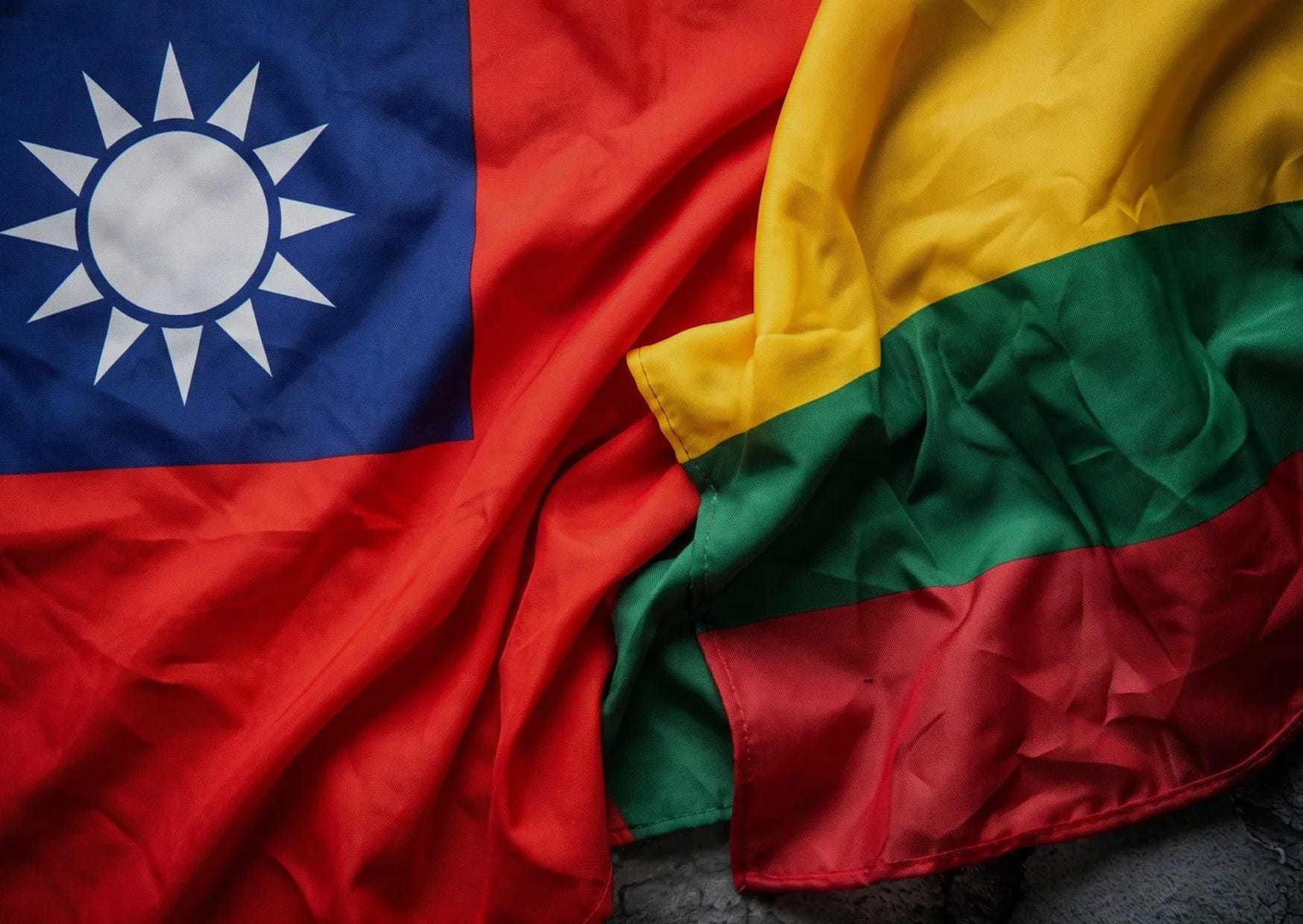
FROM SHARED VALUES TO SHARED SUCCESS: TAIPEI-LITHUANIA RELATIONS
Written by Tomas Martinatis, Member of the Lithuanian Parliament
Although thousands of kilometres separate Vilnius and Taipei, the similarities between their societies are striking. Both have learned that security cannot be taken for granted, that resilience must be actively built, and that strong international partnerships are essential in an increasingly uncertain world.
This understanding shaped Lithuania’s decision to allow the opening of the Taiwanese Representative Office in Vilnius in 2021. The decision came at a price. Beijing downgraded diplomatic relations, restricted trade and applied economic pressure not only on Lithuania but also on international companies linked to Lithuanian supply chains. Although the European Union expressed political support and developed new instruments to counter economic coercion, Lithuania’s experience exposed the limits of European solidarity in an interconnected global economy.
Lithuania accepted political and economic risks with the expectation that closer ties with Taipei would open new avenues for trade, investment, innovation, and technological cooperation. Particular attention centred on advanced industries such as semiconductors and other high-value technologies, and some even envisioned Lithuania becoming a gateway for high-tech investment into the European market.
Five years later, an honest assessment suggests that the political relationship is stronger than ever. Academic and scientific cooperation has expanded, creating new links between Lithuanian and Taiwanese universities, researchers, and students. While these developments may generate significant benefits in the long term; tangible outcomes — whether in innovation, business creation, or technological partnerships — may take years to emerge. However, the economic results have been more modest than many anticipated. Bilateral trade remains limited at around €190 million annually, compared to €130 million in the year 2021. Economic cooperation has yet to reach the scale once envisioned by policymakers and business leaders.
Good intentions are not a strategy, and political goodwill is not an economic policy. Partnerships built on shared values are strongest when they also generate measurable economic and technological benefits for both sides. Lithuania’s rapidly growing defence innovation ecosystem, strengthened by close cooperation with Ukraine, complements Taiwan’s world-leading expertise in semiconductors and advanced manufacturing. Joint projects in drones, cybersecurity, dual-use technologies and resilient supply chains would strengthen both countries’ security and competitiveness. As authoritarian states become increasingly sophisticated in using economic leverage to achieve political goals, democracies must demonstrate that cooperation among like-minded partners produces tangible results. Five years after the opening of the Taiwanese Representative Office, Lithuania and Taiwan have shown that shared values can build strong political partnerships. The challenge now is to ensure those shared values also produce shared success.
ACROSS THE INDO-PACIFIC
South Asia
Afghanistan and Pakistan continued strikes into each other’s territories this month, threatening the fragile ceasefire between them. Taliban forces also cracked down on a rare protest in the country against recent arrests of women and girls over alleged dress code violations. Meanwhile, the EU held talks with Taliban leaders in Brussels this week on returning unsuccessful Afghan asylum seekers. According to EU data, member states have approved about half of 1 million asylum applications received from Afghans between 2013 and 2024.
India‘s imports of Russian crude are projected to surge to an all-time high of 2.55 million barrels per day (bpd) this month, up from 2.13 million bpd in May. Compared to an average share of 23 per cent of India’s total crude imports in the three months before the US-Iran war, Russia is expected to now account for a nearly 50 per cent share. War-related supply disruptions have also pushed India’s imports of liquefied petroleum gas (LPG) — widely used as domestic cooking fuel — to an unprecedented high of over 1 million metric tonnes. Meanwhile, the ‘Cockroach Janta Party’ youth movement is currently holding an indefinite protest, braving extreme heat and police pushback, until India’s federal education minister resigns. Their primary grievances centre on widespread exam paper leaks, grading corruption, and inadequate government responses that have thrown the futures of millions of students into limbo and caused a tragic spike in youth suicides.
Earlier this month, Bangladesh announced a USD 77 billion national budget, targeting 6.5 per cent economic growth. Overall spending is set to rise by 19 per cent, and development expenditure is expected to expand by 47 per cent, as the government seeks to revive an economy strained by high prices, weak investment and financial sector fragility. This week, Prime Minister Tarique Rahman is visiting Malaysia and China. Malaysia is a key partner, hosting around 800,000 Bangladeshi workers, accounting for some 37 per cent of its foreign workforce in the manufacturing, construction, plantations and agriculture sectors. Rahman will likely seek more infrastructure projects under the Belt and Road Initiative as well as investment in technology, renewable energy, agriculture and healthcare. Meanwhile, ties with India were further strained after the recently elected BJP-led government in West Bengal launched a “detect, delete and deport” policy and established a holding centre for illegal foreign nationals.
Sri Lanka deployed its military to support mosquito-control efforts as the country battles a severe dengue outbreak, which is straining health services. Over 48,000 cases have been reported so far this year, with daily infections reaching 1,000 recently. Meanwhile, the island nation is at risk of becoming a hub for transnational cybercrime, driven by crackdowns in Southeast Asia that are pushing Chinese-run criminal networks to relocate their vast scam operations.
Southeast Asia
The President of Myanmar, Min Aung Hlaing, paid a major state visit to China, its staunchest ally, from 15-19 June, his first to the country since being appointed president in April. The two countries pledged to continue to support each other in areas of “core interest and major concern”. Beijing is particularly concerned about the proliferation of internet scam compounds in Myanmar, and urged cooperation to combat telecommunications fraud, online gambling, and drug trafficking.
The state visit is also part of a broader push by Myanmar to end its diplomatic isolation. Myanmar is actively seeking a seat at the upcoming ASEAN summit in November, but some ASEAN members want to see more progress in implementing the 5 Point Consensus. Myanmar has been barred from top-level ASEAN meetings since the 2021 coup.
Meanwhile, in the Philippines, the impeachment trial of Vice President Sara Duterte for alleged misuse of public funds, unexplained wealth, and betrayal of public trust continues to dominate the news cycle. If found guilty, she would be removed from her post and permanently barred from public office. The impeachment is largely seen as part of an ongoing feud between the two most important political dynasties in the Philippines: the Duterte and Marcos families.
In Indonesia, civil society groups gathered in Jakarta and other cities to protest high food and fuel costs. They also called for the cancellation of what they see as ‘wasteful’ welfare programs, notably President Prabowo Subianto’s flagship free meal program. The Indonesian currency hit a historic low of 18,000 rupiah to the dollar earlier in the month, prompting the Bank of Indonesia to intervene with an expected interest rate hike.
Southeast Asian leaders met with Russian President Vladimir Putin at the Russia-ASEAN Summit in Kazan, Russia. Topics covered included energy cooperation, defence-technical ties, trade, logistics, and cultural exchange. For Moscow, the summit reflects a long-term pivot to Asia and ambitions to create a broader Eurasian integration space that includes Southeast Asia. For Southeast Asian states, engagement with Russia reinforces a commitment to strategic autonomy and balancing between the US, China, and Russia.
A new investigation into scam compounds and human trafficking in Cambodia revealed that the government’s crackdown late last year has led to a humanitarian crisis. Former scam compound workers, many of whom are victims of human trafficking, have been left in limbo as they are unable to muster hefty fines accrued for overstaying their visas.
East Asia
In Japan, Tokyo used the G7 summit in France to advance its long-standing focus on economic security, particularly efforts to reduce dependence on Chinese critical minerals and strengthen supply-chain resilience. The issue gained urgency as Chinese rare earth restrictions continued to affect Japanese industry. Ahead of the summit, Prime Minister Sanae Takaichi visited the UK, where the two sides agreed to a landmark GBP 18 billion investment and technology package focusing on clean energy, infrastructure, and financial services. The two sides also reaffirmed their commitment to the GCAP fighter programme. Takaichi later travelled to Italy, where she and Prime Minister Giorgia Meloni likewise pledged to reaffirm their commitment to the programme, underscoring Japan’s growing role in European security partnerships.
In China, trade tensions with Europe intensified as German Chancellor Friedrich Merz criticised China’s large trade surplus, saying the Chinese currency was undervalued by 30 per cent and raising the prospect of a Plaza Accord-style response, reflecting growing European concerns over China’s large trade surplus and the perceived yuan undervaluation. The remarks highlight a broader shift in European thinking, with policymakers increasingly viewing China’s export-led growth model as a strategic challenge. Meanwhile, China’s latest economic data underscored persistent structural weaknesses. Despite booming exports and manufacturing output, retail sales fell for the first time since 2022, and the property sector showed continued distress, highlighting Beijing’s reliance on exports to drive growth.
In the Koreas, President Lee Jae-myung at the G7 summit asked Donald Trump to lead efforts towards peacefully resolving the North Korean nuclear issue, signalling Seoul’s interest in reviving engagement with Pyongyang. Yet hopes for renewed engagement were tempered by Kim Jong Un’s pledge to expand North Korea’s nuclear arsenal and “thoroughly exercise the position of a nuclear weapons state”. The contrasting signals highlighted the wide gap between Seoul’s renewed emphasis on diplomacy and Pyongyang’s commitment to nuclear expansion. Seoul also announced it would accept any North Korean prisoners of war captured in Ukraine who wished to defect.
In Taiwan, the armed forces on 22 June began a five-day Immediate Combat Readiness Exercise focused on rapid mobilisation and peacetime-to-wartime transitions. The drills reflect concerns that China could escalate from grey-zone actions, such as military exercises or drone incursions, to actual hostilities with little warning. Meanwhile, Kuomintang (KMT) Chairwoman Cheng Li-wun’s much-publicised two-week US visit ended on a muted note after several expected meetings failed to materialise. Analysts attributed her lukewarm reception to Washington’s concerns regarding the KMT’s opposition to higher defence spending and scepticism about her approach to China.
The Pacific
Papua New Guinea’s parliament has formally begun consideration of Bougainville’s post-referendum future, approving a sessional order that establishes the framework for debate on the autonomous region’s independence bid following the 2019 referendum. Bougainville President Ishmael Toroama has accused Port Moresby of breaching commitments made under the Melanesian Spearhead Group’s mediation process by delaying implementation of agreed political milestones. Separately, PNG Water has warned that ageing infrastructure, underinvestment and rapid population growth are pushing Port Moresby toward a water and sanitation crisis. Troops from PNG, Australia, NZ, Canada, France, Japan, the UK and the US also completed a major unexploded ordnance disposal operation, destroying more than 2,200 World War II-era explosive remnants and highlighting the continuing security burden of wartime legacies.
Solomon Islands PM Manele has proposed renewed discussion of a region-wide Pacific security arrangement that would place Pacific Island countries at the centre of regional security governance. Debate over relations with Beijing continues to intensify, with Police Minister Jimson Tanangada calling for an end to Chinese involvement in PNG policing programmes. The Solomon Islands and Vanuatu have meanwhile signed a memorandum of understanding covering policing cooperation, border management and transnational crime, highlighting a growing emphasis on subregional security coordination. Vanuatu secured a USD 10 million Asian Development Bank grant to strengthen public financial management and economic resilience.
Fiji, the Philippines and Sri Lanka are expanding deployment of drones and unmanned systems for maritime surveillance, fisheries monitoring and maritime law enforcement, reflecting a broader trend toward lower-cost domain awareness capabilities. At the same time, the Quad — Australia, India, Japan and the United States — has committed to jointly developing port infrastructure in Fiji, marking the group’s first collective infrastructure project in the Pacific Islands and prompting criticism from China, which views the initiative as part of a broader strategic containment effort. Regional maritime security cooperation continues to expand, with Operation Irensia bringing together the United States, Australia and Pacific Island partners to conduct coordinated maritime patrols targeting illegal, unreported and unregulated fishing, narcotics trafficking and other transnational threats.
Samoa is seeking an additional NZ$4.2 million to address costs associated with the HMNZS Manawanui grounding and environmental response effort, while Niue has launched a new programme with UNDP and Conservation International aimed at strengthening climate resilience, biodiversity protection and blue-finance mechanisms. Pacific governments and financial institutions are intensifying efforts to preserve banking relationships, a longstanding regional concern that threatens remittance flows, trade and financial inclusion. Tonga’s armed forces expanded their engagement with regional security partners through participation in Indo-Pacific security discussions hosted in Hawaii.
Elsewhere, campaigning is intensifying ahead of New Caledonia’s provincial elections (28 June), the first major electoral test since the territory’s 2024 unrest and a key indicator of future independence negotiations. Nauru has issued a rare public rebuttal after allegations emerged that non-citizens resettled under Australia-linked arrangements faced threats and intimidation. In the North Pacific, leaders in the Commonwealth of the Northern Mariana Islands have welcomed US moves to reopen previously protected waters to commercial fishing, while Tokelau faces concerns over reduced fisheries access following changes to management arrangements administered by New Zealand.
New Zealand’s strategic posture continues to harden amid intensifying great-power competition. Wellington has committed to lifting defence spending toward 2 per cent of GDP over the coming decade, though US officials have argued that further increases may be necessary. NZ intelligence agencies have adopted increasingly explicit language regarding Chinese influence and espionage, while Beijing has sanctioned four New Zealand parliamentarians following a visit to Taiwan. Palau’s new radar installation further highlights growing US security presence in the Pacific amid China’s rising influence.
Lowy Institute polling shows Australian trust in the United States has fallen to its lowest recorded level despite Canberra’s continued alignment with Washington. Australia has signed a billion-dollar over-the-horizon radar agreement with Canada to expand long-range surveillance coverage and remains committed to AUKUS, although reports that secondhand US nuclear-powered submarines may be transferred under revised arrangements are generating significant debate. In separate analysis, the Lowy Institute has warned that China’s missile forces could increasingly threaten Australian bases and infrastructure, reinforcing concerns about the deteriorating nature of the regional security environment.
THE BEST OF 9DASHLINE
This month’s top reads explore the growing tension between strategic competition and political restraint across the Indo-Pacific and beyond. In Taiwan, Percy Yixuanchen Yu examines the island’s “democratic trilemma”, arguing that efforts by Washington and Beijing to stabilise bilateral relations risk marginalising Taiwan’s democratic agency even as Taipei seeks to strengthen deterrence and resilience. A second article on Taiwan’s undersea communications infrastructure highlights the challenges of managing strategic competition below the threshold of conflict, contending that resilience and careful attribution — rather than alarmism — are essential to responding effectively to grey-zone coercion.
Elsewhere, Eve Register analyses Pakistan’s continued participation in the European Union’s GSP+ scheme, arguing that geopolitical considerations have increasingly outweighed concerns over persistent human rights violations, exposing tensions between the EU’s normative commitments and strategic interests. Meanwhile, Liselotte Odgaard examines the evolving relationship between NATO and the Indo-Pacific Four (IP4), contending that cooperation is likely to deepen selectively in areas such as maritime security, cyber defence, and emerging technologies, but will remain constrained by European caution, divergent threat perceptions, and concerns about provoking China.
These articles point to a broader regional pattern: the growing difficulty of balancing strategic objectives with political principles under conditions of intensifying geopolitical rivalry. Whether preserving democratic agency, responding to grey-zone challenges, upholding normative commitments, or building new security partnerships, states and institutions are increasingly seeking flexible and adaptive approaches that avoid unnecessary escalation while safeguarding their long-term interests. The central challenge lies in determining how to maintain resilience and credibility.

TAIWAN’S DEMOCRATIC TRILEMMA AFTER BEIJING
The May 2026 Trump–Xi summit in Beijing highlighted what Percy Yixuanchen Yu describes as Taiwan’s “democratic trilemma”: preserving its democratic voice, avoiding escalation with China, and maintaining US support without becoming a bargaining chip in broader US–China relations. While the summit’s emphasis on strategic stability may reduce the risk of immediate confrontation, it also risks marginalising Taiwan’s elected government by placing decisions about the island’s future primarily in the hands of Washington and Beijing. The debate surrounding a possible phone call between US President Donald Trump and Taiwanese President Lai Ching-te illustrates Taiwan’s struggle to remain politically visible within a framework increasingly focused on managing great-power competition.
Taiwan’s domestic democratic processes are central to its security and deterrence strategy. Defence spending, military modernisation, and resilience measures require public and legislative support. Recent disputes between the ruling Democratic Progressive Party and the opposition-controlled legislature over defence budgets demonstrate how security policy must be democratically authorised rather than simply announced. While this pluralism can slow decision-making, it ultimately strengthens legitimacy by ensuring that deterrence policies are rooted in public consent and can withstand electoral competition and political scrutiny.
Yu also challenges assumptions that Taiwan’s strategic importance in AI provides a “silicon shield” against coercion. Taipei’s technological value depends on the resilience of its democratic institutions, social cohesion, and communications networks. Advanced chip manufacturing alone cannot guarantee security if Taiwan’s connectivity, governance capacity, or democratic voice are undermined. For Taiwan, as well as partners in Washington, Europe, and the Indo-Pacific, the central challenge is therefore to balance de-escalation with the preservation of Taiwan’s democratic agency, ensuring that stability in US–China relations does not come at the cost of silencing the society most directly affected by the outcome.
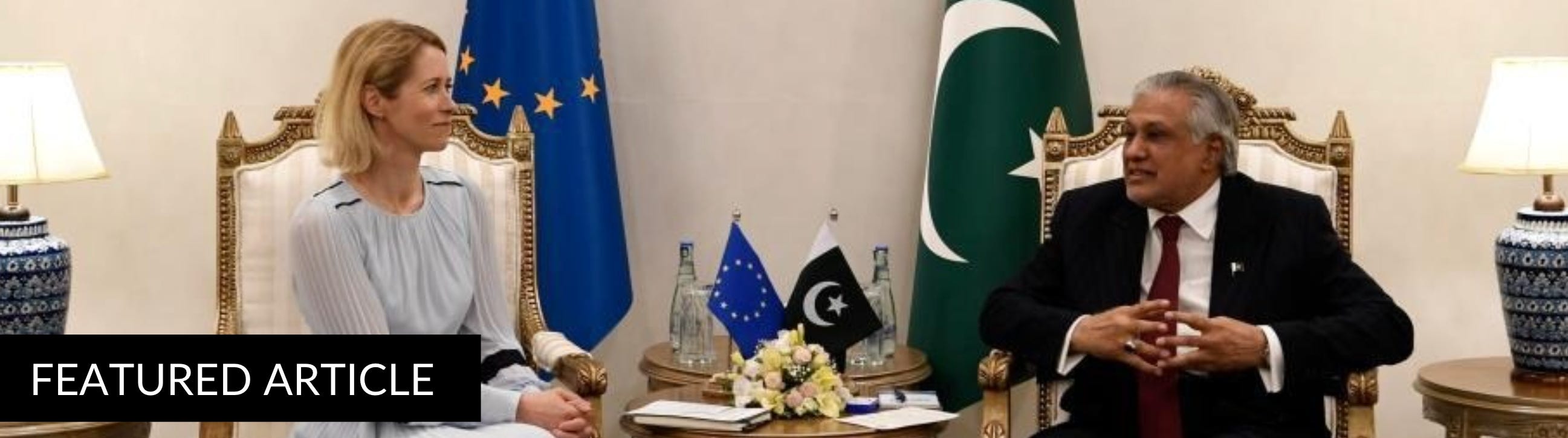
PREFERENTIAL TARIFFS BUT UNMET PROMISES: PAKISTAN’S GSP+ STATUS
Pakistan’s access to the European Union’s Generalised Scheme of Preferences Plus (GSP+) has delivered substantial economic benefits since 2014, with exports to the EU doubling and most exports receiving preferential tariff treatment. However, Eve Register argues that Pakistan has failed to meet the scheme’s requirement of compliance with 27 international conventions on human rights. Despite repeated concerns from the European Parliament and independent monitoring organisations, the European Commission has continued to endorse Pakistan’s participation in the scheme, revealing a tension between the normative commitments and strategic interests.
At the heart of the issue are gaps between Pakistan’s formal reforms and actual implementation. While Islamabad has introduced measures such as anti-torture legislation and minority rights initiatives, independent assessments point to continuing problems including blasphemy prosecutions, enforced disappearances, extrajudicial killings, and the persecution of human rights advocates. EU reporting has highlighted limited or symbolic reforms while overlooking evidence that many obligations under the GSP+ framework remain unmet in practice.
Register concludes that the European Commission’s reluctance to suspend Pakistan’s GSP+ status is driven by geopolitical considerations, including counter-terrorism cooperation and concerns about pushing Pakistan closer to China. This selective enforcement risks undermining the credibility of the entire GSP+ programme by signalling that other beneficiaries may avoid consequences for non-compliance. As a result, the EU’s commitment to human rights appears increasingly subordinated to broader foreign policy objectives, creating a disconnect between stated values and its actions.

TAIWAN’S UNDERSEAS CABLES ARE AN INDO-PACIFIC CRISIS TEST
Taiwan’s undersea communications cables have become an increasingly important security concern. While recent incidents involving vessels linked to China have understandably raised suspicions, treating every disruption as a hostile act risks misdiagnosis and could unnecessarily escalate tensions in an already sensitive cross-Strait environment.
Repeated cable cuts expose genuine vulnerabilities in critical infrastructure that could be exploited during a crisis or through grey-zone coercion. The challenge for Taiwan and allies is to improve resilience, strengthen monitoring and attribution capabilities, and investigate incidents rigorously without jumping to conclusions before sufficient evidence is available. Both underreaction and overreaction carry risks: the former may invite further coercion, while the latter could transform ambiguous incidents into larger geopolitical confrontations.
Ultimately, Taiwan’s cable network is a test of crisis management for the broader Indo-Pacific. Rather than responding to every disruption as proof of hostile intent, governments should focus on enhancing repair capacity, improving information-sharing, and developing clear mechanisms for attribution. Resilience — not alarmism — is the most effective response, allowing Taiwan and its partners to deter coercion while avoiding the escalation adversaries may seek to provoke.
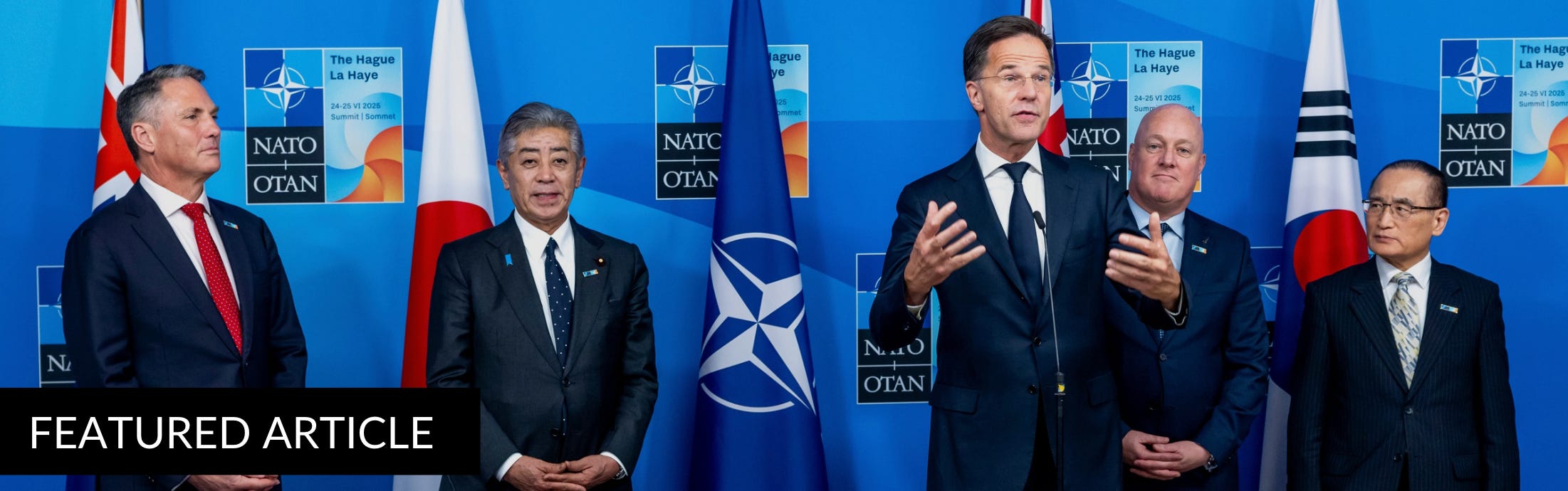
NATO AND THE IP4: CAUGHT BETWEEN AMBITION AND RESTRAINT
As NATO prepares for its July 2026 summit, debates over the future of the alliance’s engagement with the Indo-Pacific Four (IP4) — Australia, Japan, New Zealand, and South Korea — have intensified. Liselotte Odgaard argues that NATO-IP4 cooperation has evolved from political dialogue into a selective partnership shaped by two competing dynamics: US strategic retrenchment and European caution towards China. While the US has encouraged greater burden-sharing, Europe remains reluctant to endorse institutionalised partnerships that could heighten tensions with Beijing. Consequently, NATO-IP4 cooperation is increasingly centred on practical issue areas such as maritime security, emerging technologies, and cyber defence rather than on the creation of a formalised global alliance.
The NATO-IP4 framework reflects a broader shift towards minilateralism, whereby small groups of like-minded states cooperate on specific issues outside rigid multilateral institutions. This model has become particularly attractive for European middle powers, which lack the capacity to shape Indo-Pacific security independently but seek to influence regional developments through niche capabilities, including naval diplomacy, regulatory influence, and technological expertise. At the same time, the partnership remains constrained by divergent threat perceptions, varying political priorities, and uneven commitment among allies.
China’s response further complicates deeper NATO-IP4 integration. Although Beijing views NATO’s Indo-Pacific engagement as evidence of strategic encirclement, European states continue to balance concerns about China’s challenge to the international order with their economic interdependence with China. As a result, European engagement in the Indo-Pacific has remained cautious, emphasising selective presence and functional cooperation rather than sustained commitments. NATO-IP4 cooperation is likely to deepen incrementally in areas such as maritime security, technology, and resilience, but European hedging and Chinese threat perceptions will continue to limit institutionalisation. This adaptable approach may prove more effective than a fully formalised alliance framework in an era of great power competition and institutional uncertainty.
CONSULTING SERVICES
At 9DASHLINE, we are your Indo-Pacific experts. We provide sharp and timely analysis on the complex geopolitical landscape of a region brimming with economic and strategic opportunities. Our bespoke consulting solutions empower you to make informed decisions that navigate this dynamic environment.
We welcome your enquiry.
The Navigator is produced by:
Luana Correia, Daniel McIntyre, Liz Cherchia, Dr Manali Kumar, and David MacSweeney.
SUBSCRIBE NOW
HELP US BY SHARING — THANK YOU!