

THE NAVIGATOR
MAY 2026

HEATWAVES AND HEDGING: THE INDO-PACIFIC CHARTS A PRAGMATIC PATH
Written by Dr. Manali Kumar, Executive Director
May has made it clear that economic pressure has become inseparable from strategic competition. From record-breaking heatwaves across South Asia to fuel shortages rippling through Southeast Asia after continued instability in the Middle East, governments across the Indo-Pacific are confronting overlapping crises of energy, inflation, public health, and supply-chain vulnerability. At the same time, diplomatic traffic across the region has accelerated dramatically, as states scramble to hedge against uncertainty while preserving room for manoeuvre in an increasingly fragmented order.
Our brief this month, exploring Europe’s growing tendency toward “strategic self-containment” in its dealings with China, reflects a broader global pattern: states are increasingly adjusting their behaviour pre-emptively in anticipation of geopolitical pressure. Across the Indo-Pacific, governments are simultaneously diversifying economic partnerships, deepening selective security ties, and avoiding overt bloc politics wherever possible.
The result is a flurry of overlapping diplomatic activity. Washington moved to reset ties with New Delhi ahead of the Quad meeting, while Xi Jinping hosted the US President and Pakistan’s prime minister in Beijing. ASEAN convened around energy security and supply-chain resilience, even as both the US and China launched competing AI initiatives with the bloc within days of each other. Meanwhile, countries from Vanuatu to Indonesia continue to insist on maintaining strategic autonomy despite intensifying pressure from both major powers.
Beneath this diplomatic activism, however, lies mounting economic strain, as governments across the region grapple with rising prices, slowing growth, and increasingly fragile social stability. The Indo-Pacific is not fragmenting into rival camps so much as adapting to a world where resilience, optionality, and access have become the defining currencies of power. As geopolitical competition deepens and economic shocks become more frequent, the challenge for regional states will not simply be balancing between Washington and Beijing, but managing the domestic consequences of a more volatile and constrained international system.
In case you missed it, the latest episode of The Bridge, in collaboration with the European Parliament in ASEAN, features Bernd Lange MEP, Chair of the European Parliament’s Committee on International Trade. He joins Richard Heydarian and Zsuzsa Anna Ferenczy to discuss recent developments in EU trade negotiations with ASEAN partners, including Thailand, Malaysia, and the Philippines.
9DASHLINE delivers the sharp, timely analysis you need to stay ahead of the curve.
Subscribe now.
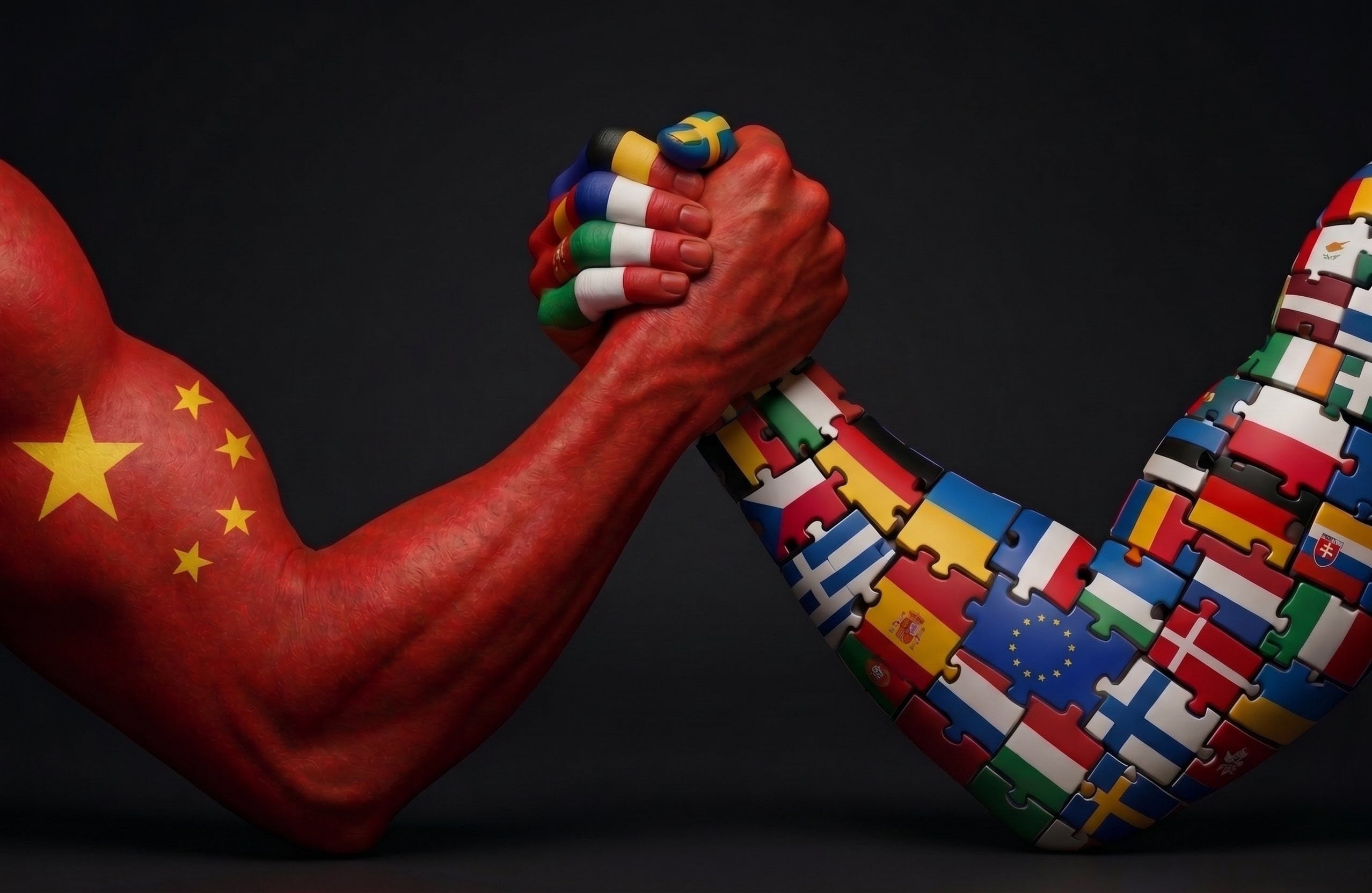
THE RISE OF EUROPE’S STRATEGIC SELF-CONTAINMENT
Written by Marie Hiliquin, Political Geographer and Postdoctoral Fellow, IRSEM Europe
In late April 2026, three Indian Ocean states withdrew overflight clearance for Taiwan’s presidential aircraft under Chinese economic pressure, forcing President Lai Ching-te to abandon a planned state visit to Eswatini. When Taiwan sought an alternative route through Europe, Germany and the Czech Republic reportedly also declined. In this case, Beijing did not need to ask twice; it did not need to ask at all.
The episode illustrates how China’s diplomatic toolkit operates across a spectrum ranging from explicit coercion to induced self-containment, where governments begin restricting their own behaviour before any formal demand is made. While Beijing has long relied on this dynamic, Europe increasingly appears susceptible to it. Economic conditionality, security pressure, diplomatic engagement, and international rule-making work most effectively in combination, but also when their targets no longer perceive them as coercive tools in the first place.
Despite holding significant economic leverage over a Beijing beset by economic challenges, European governments have progressively narrowed their own policy space. Three structural asymmetries help explain why. China plans across long strategic cycles, while Europe governs across electoral ones. Beijing acts from a unified political centre, while the EU lacks both a Taiwan policy and a coordinated member-state position on diplomatic exposure. And, although Brussels theoretically holds considerable collective leverage, individual member states cannot deploy it unilaterally, while the EU itself often lacks the consensus required to act collectively.
In the coming months, negotiations over the EU’s next Multiannual Financial Framework, including the proposed European Competitiveness Fund, will test whether Europe can reduce its strategic dependencies on China in practice rather than rhetoric. The broader question is whether the current pattern of accommodation toward Beijing is temporary or is quietly becoming more deeply embedded across Europe’s China policy.
ACROSS THE INDO-PACIFIC
South Asia
A record-breaking heatwave has gripped the region, with some areas in Bangladesh, India, and Pakistan approaching or exceeding 45-50 degrees Celsius (113-122 degrees Fahrenheit). Reports suggest that more than 90 of the world’s hottest cities have been in India this year, emphasising the critical need for systemic reforms to build long-term resilience against rising temperatures.
After becoming the first country to formally recognise the Taliban government, this month, Russia announced a “full-fledged partnership” with Afghanistan. Meanwhile, the EU faced criticism from rights groups after seeking technical-level talks in Brussels with the Taliban on the return of individuals deemed security threats. EU officials stressed that the discussions would not amount to formal recognition of the Taliban government, following earlier talks held in Kabul in January. A new UNDP report warns that around 28 million people in Afghanistan were living in poverty in 2025, with over 80 per cent of households in debt and 74 per cent unable to meet basic needs. The country’s trade deficit widened to a record USD 11.3 billion, while international aid has been falling despite rising humanitarian pressures.
Meeting in Beijing this week, Xi Jinping and Pakistani Prime Minister Shehbaz Sharif pledged to deepen cooperation on the China-Pakistan Economic Corridor, along with agreeing to upgrade the Karakoram Highway, expand Gwadar Port, and strengthen transport links between the two countries. Pakistan also promised additional measures to protect Chinese workers and investments, amid continuing security concerns following militant attacks targeting Chinese nationals and infrastructure projects.
Meanwhile, militant violence intensified in Pakistan, with more than 30 people killed in a suicide bombing by separatist militants targeting a train in Balochistan. Militants also attacked a security outpost in the country’s northwest, killing at least eight troops and injuring dozens after detonating a vehicle packed with explosives. Islamabad accuses militant groups operating from Afghan territory of carrying out attacks inside Pakistan — allegations Kabul denies.
A measles outbreak continued to spread in Bangladesh this month, with over 60,000 suspected cases and more than 500 children dead. With the country facing mounting economic pressure due to the war in the Middle East, last week its central bank unveiled a USD 5 billion stimulus package to help re-open factories, create jobs, and restore business confidence. The ADB also announced USD 5 billion in support over the next five years to support the country’s Integrated Growth Network Development Initiative, which seeks to improve connectivity, boost investment, and promote more balanced regional development.
Nepal also renewed its long-running border dispute with India after New Delhi announced the resumption of a pilgrimage route through the contested Lipulekh Pass into Tibet. Kathmandu claims the area under the 1816 Treaty of Sugauli, while India maintains the route has been used for the Kailash Manasarovar pilgrimage from the 1950s until being suspended in 2020 due to the COVID-19 pandemic.
Ahead of a Quad meeting in India, US Secretary of State Marco Rubio met Foreign Minister Subrahmanyam Jaishankar and Prime Minister Narendra Modi in an effort to reset ties between the two strategic partners. The talks covered the Middle East, trade, visas, maritime security and energy supplies, and Rubio also delivered an invitation from President Donald Trump for Modi to visit the White House. The Trump administration also dropped fraud charges against Indian billionaire Gautam Adani and settled alleged Iran sanctions violations involving one of his companies, reportedly after his lawyer — who also serves as Trump’s personal attorney — said Adani planned to invest USD 10 billion in the United States once the cases were resolved.
Modi urged citizens to tighten their belts through a seven-point plan that recommended austerity measures, including using public transport and avoiding foreign travel, among others, alongside measures including a temporary ban on sugar exports and a sharp rise in gold import duties. The moves sparked widespread backlash, prompting clarifications and partial rollbacks, as well as nationwide strikes by transport workers over fuel price hikes and protests by pharmacists.
Meanwhile, the Modi government responded with its characteristic repression, blocking the website and social media accounts of the Cockroach Janta Party (CJP) — a satirical online movement founded this month by a 30-year-old student as a parody of India’s ruling party. The movement was sparked by controversial remarks from the Chief Justice of India that were widely — though later clarified as misquoted — interpreted as comparing unemployed youth to “cockroaches” and “parasites”, and quickly gained traction, attracting over 20 million followers in just a few days.
With fuel prices up 40 per cent, fuel rations in place, and Wednesdays declared public holidays, Sri Lanka is reportedly now in talks with China and Russia to buy fuel to make use of the US’ temporary sanctions waiver in place until 17 June. Meanwhile, Indian officials clarified that India has been and will continue to buy Russian crude regardless of the US’ sanctions.
Southeast Asia
The Association of Southeast Asian Nations (ASEAN) held its 48th summit in Cebu in the Philippines from 6-8 May. Given the ongoing regionwide fuel crisis and national energy emergency declared in the Philippines as a result of supply chain disruptions in the Strait of Hormuz, preparatory meetings were largely conducted virtually in the lead-up to the summit. Summit discussions focused on global tensions stemming from the United States and Israel’s war with Iran and enhancing energy security and supply chain resilience to mitigate fuel shortages. Regional leaders discussed a regional framework on petroleum security, which would create shared stockpiles for periods of emergency like the present moment.
Leaders also touched on the conflict in Myanmar, which remains unresolved more than five years on from the 2021 military coup. Thailand has been making the case for ASEAN to normalise ties with the new military government in Naypyitaw. While some member states, such as Indonesia, Malaysia and the Philippines, have resisted calls to re-engage the junta, insisting that more progress is necessary, ASEAN Secretary General Kao Kim Hourn confirmed that foreign ministers will hold a virtual meeting with Myanmar regime-appointed foreign minister Tin Maung Swe at an undetermined date in the near future.
The secretary general also reiterated that ASEAN had made significant progress on its negotiations with China on a Code of Conduct on the South China Sea, which is expected to be completed later this year.
Separately, the United States and ASEAN held a first-of-its-kind AI Ministerial in Singapore on 20 May to discuss building secure global supply chains and identify “opportunities to strengthen cooperation in AI development and governance,” according to a readout by the US Department of State. Under Secretary of State for Economic Affairs Jacob Helberg represented the United States. Just days later, on 24 May, China hosted an inauguration ceremony to launch a new ASEAN-China Artificial Intelligence Industry Innovation Centre in Beijing. The timing allows ASEAN to preserve its cherished image of balance and nonalignment, but these developments also indicate that AI is increasingly becoming yet another domain of great power rivalry between the United States and China.
Meanwhile, Singapore is hosting the annual Shangri-La Dialogue, the region’s preeminent Track 1.5 defence dialogue, from 29-31 May. General Secretary To Lam of Vietnam is set to give the keynote speech, while Chinese Defence Minister Dong Jun will not attend, marking the second year in a row that Beijing has declined to send a senior-level representative.
East Asia
In China, the Trump-Xi summit pointed towards an emerging strategic stalemate in US-China relations, though Trump’s transactionalism and strategic drift have likely reinforced Beijing’s belief that the global balance of power is shifting in its favour. EU-China tensions sharpened as several major European states backed tougher trade-defence tools targeting Chinese industrial overcapacity and strategic supply-chain dependencies, signalling a growing willingness within Europe to push back against Chinese economic pressure and defend its industrial base. Separately, China’s State Council released new guidance encouraging local governments to further ease hukou restrictions, as Beijing seeks to boost domestic consumption and economic growth amid mounting trade pressures and weak demand.
In Japan, Tokyo continued to expand regional security and defence-industrial cooperation amid growing concern over China’s military trajectory and uncertainty surrounding the Trump administration’s regional posture. For the first time, Japan fully participated in the Balikatan exercises, which included live-fire anti-ship missile drills. Reports suggested Tokyo is considering exports of Type-88 anti-ship missiles to Manila. Prime Minister Sanae Takaichi is scheduled to visit the UK and Italy ahead of the G7 next month, tied to the GCAP next-generation fighter programme.

Separately, the deterioration in Japan-China relations was further underscored by Financial Times reporting that Xi Jinping spoke at length and unusually forcefully about Takaichi during the Trump-Xi summit, reflecting Xi’s animus towards the Japanese PM.
Japan and South Korea agreed to strengthen cooperation on energy security, critical minerals, and supply chain coordination during talks in Andong — President Lee Jae Myung and Sanae Takaichi’s fourth meeting in about six months — underscoring the importance both sides place on deepening cooperation amid growing regional instability. Separately, South Korea’s Ministry of National Defence said Seoul and Washington made “significant progress” in discussions regarding revisions to DMZ management arrangements, renewing attention on alliance command structures and South Korea’s long-standing desire for greater operational autonomy. Meanwhile, North Korea continued hardening its posture towards the South, with Kim Jong Un saying the southern border with South Korea will be turned into an “impregnable fortress“.
In Taiwan, the Democratic Progressive Party’s (DPP) pro-US defence and security strategy became directly exposed to Trump-Xi transactionalism following Trump’s meeting with Xi Jinping in Beijing. In an interview with FOX News, Trump described a pending USD 14 billion arms sales package to Taiwan as “leverage” in negotiations with Beijing, while stressing that the US was being asked to “travel 9,500 miles to fight a war”. Trump’s attitude towards Taiwan’s security sent shockwaves through Taiwanese politics, making it far easier for the opposition Kuomintang (KMT) to portray the US as untrustworthy and argue that Taiwan’s interests are better served through accommodating China and slowing defence investment.
The Pacific
Vanuatu confirmed it will sign separate strategic agreements with both Australia and China, with PM Jotham Napat arguing the deals are necessary to protect national sovereignty and maintain policy independence amid intensifying geopolitical competition in the Pacific. The agreements — the Australia-linked Nakamal Agreement and China-backed Namele Agreement — highlight Port Vila’s continued refusal to align exclusively with either bloc.
Australia looks set to deepen its Pacific security diplomacy via a security pact with Fiji, highlighting intensifying competition to align island states. Meanwhile, China criticised a Quad-linked maritime surveillance initiative tied to plans to jointly develop Fiji’s port infrastructure, signalling Beijing’s continued opposition to expanded regional monitoring and intelligence-sharing frameworks.
Canberra announced plans for a domestic missile and weapons manufacturing hub in Western Australia, expanding sovereign defence production capacity. Canberra also reaffirmed there is “no plan B” for AUKUS submarine procurement, underscoring long-term reliance on trilateral defence integration with the US and UK. The UK and Australia recently signed an agreement on AI security risks, embedding AI governance into defence cooperation and threat assessment frameworks.
The US extended Lockheed Martin’s contract for Guam’s Aegis Ashore missile defence system, maintaining Guam’s role as a core node in its regional missile defence architecture.
Reports indicate New Zealand is considering Japan’s Mogami-class frigates as part of fleet renewal planning. Separately, Wellington has expanded investment in drones and maritime surveillance systems to strengthen its maritime domain awareness. NZ officials again raised concerns over Chinese naval activity in the Tasman Sea following a flotilla transit near Australia and New Zealand last year.
The Cook Islands PM Mark Brown is scheduled to travel to China for the handover of a new domestic-focused vessel, reflecting ongoing Chinese maritime infrastructure diplomacy in the region. In Niue, recent elections saw Dalton Tagelagi re-elected as prime minister. Samoa, meanwhile, is experiencing political uncertainty after an appeal was filed against Prime Minister Fiame Naomi Mata’afa’s acquittal in a high-profile conspiracy-related case.
Solomon Islands’ newly elected PM Jeremiah Manele is preparing for his first official visit to Australia, marking an early step in recalibrating relations after several years of tension. Pacific leaders are preparing for the Pacific Islands Forum (PIF), set to take place in Palau in August, with external partners providing logistical support designed to help offset rising fuel costs.
Nauru’s parliament has unanimously voted to rename the country “Naoero“ — restoring the name used by its indigenous people. Separately, Taiwan rejected Nauru’s description of itself as a “province of China,” stating the framing does not reflect political reality following Nauru’s diplomatic switch to Beijing. Nauru is currently enjoying international attention for its emerging film industry amid efforts to develop cultural soft power alongside its diplomatic repositioning.
France continues to recalibrate its approach to New Caledonia, with the French National Assembly approving changes designed to allow ‘native’ participation in provincial elections. The reforms aim to ease political tensions following unrest linked to voter roll disputes and broader questions over representation.
Papua New Guinea is diversifying its diplomatic engagement, with PM Marape’s visit to France highlighting efforts by Port Moresby to move beyond traditional regional alliances.
The New Zealand Defence Force concluded a deployment in Papua New Guinea focused on security cooperation and capacity building. PNG has also advanced digital infrastructure with the activation of the Puk Puk-1 subsea cable linking Papua and PNG, strengthening domestic connectivity. In parallel, Digicel PNG became Starlink’s first reseller in the country, expanding satellite internet access and accelerating digital integration in remote regions.
Tonga and Australia completed a second international undersea communications cable, strengthening redundancy and resilience in regional digital infrastructure.
THE BEST OF 9DASHLINE
This month’s top reads examine how states across the Indo-Pacific are adapting to intensifying geopolitical competition, domestic instability, and economic disruption. In Myanmar, Dr. Hunter Marston argues that the military regime can no longer rely on the conditions that enabled the controlled liberalisation of the 2010s, as widespread armed resistance and the emergence of parallel governance structures reshape the country’s political landscape. Meanwhile, Dr. Sahar Khan and Anuttama Banerji explore the limits of US–India maritime cooperation, contending that growing strategic convergence has not yet translated into the operational coordination necessary for managing crises in the Indian Ocean.
Elsewhere, questions of strategic flexibility and regime resilience come into sharper focus. Chandarith Neak and Chhay Lim analyse Cambodia’s increasingly constrained “multi-geared” hedging strategy, arguing that intensifying US–China rivalry and weakening multilateral institutions are narrowing Phnom Penh’s room for manoeuvre between China, the US, and Vietnam. In Thailand, Apipol Sae-Tung examines how the government has responded to the 2026 oil shock through a “patronage-technocrat alliance” that combines elite political networks with technocratic crisis management to preserve stability without fundamentally restructuring the political order.
Taken together, these articles highlight a broader regional pattern: the growing difficulty of maintaining strategic and political flexibility under conditions of sustained pressure. Whether confronting internal fragmentation, balancing between competing powers, or managing economic shocks, governments and institutions across the Indo-Pacific are increasingly relying on adaptive but temporary mechanisms to preserve stability. The central challenge lies not simply in responding to immediate crises, but in determining whether existing political and strategic frameworks remain capable of managing a more fragmented and contested regional order.
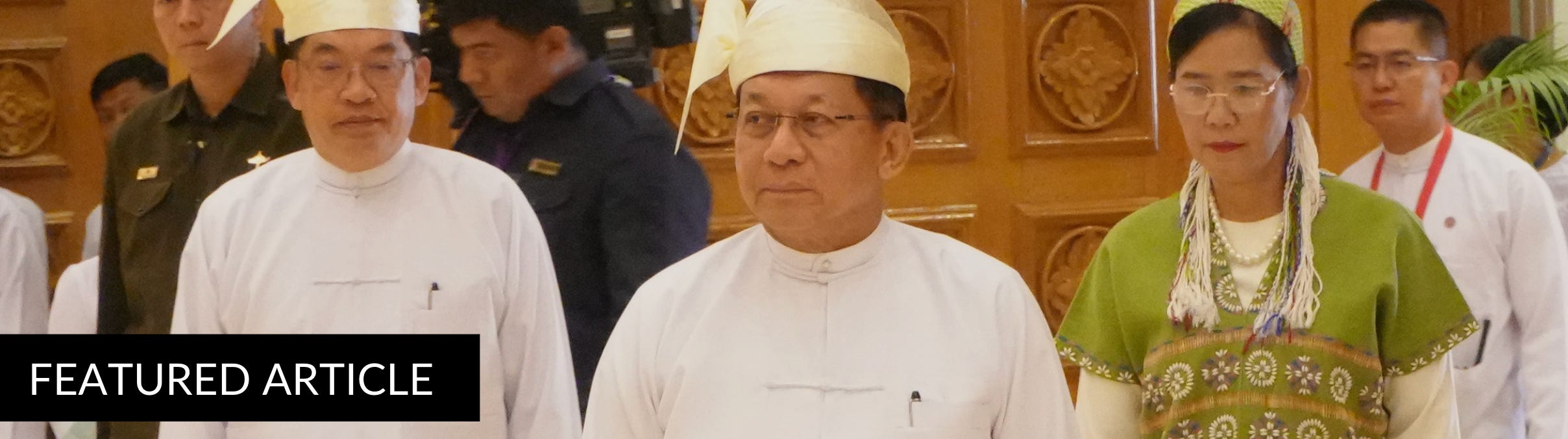
MYANMAR’S FUTURE WILL NOT RESEMBLE ITS PAST
After Myanmar’s latest military-engineered political transition, the country is confronting a different landscape from the quasi-democratic opening of the 2010s. Dr. Hunter Marston argues that while the junta’s recent elections and consolidation of power resemble earlier attempts at controlled liberalisation, the conditions that enabled reform and economic growth a decade ago no longer exist. Unlike the transition under Thein Sein, today’s military leadership faces a more fragmented political environment, entrenched armed resistance, severe economic deterioration, and widespread domestic hostility towards military rule.
Since the 2021 coup, resistance to military authority has expanded beyond longstanding ethnic armed organisations to include a large network of People’s Defence Forces and grassroots anti-junta alliances operating across the country. At the same time, the economic foundations that supported Myanmar’s previous opening have eroded under conflict, sanctions, and inflation. International investors have largely withdrawn, infrastructure and banking systems remain weakened, and the junta lacks both domestic legitimacy and meaningful international support beyond a small group of external partners.
The country’s political trajectory is also increasingly being shaped by new forms of grassroots resistance and parallel governance. In addition to armed resistance, the development of governance structures, social and education programmes, and digital banking initiatives have created alternative systems of authority beyond the control of the military. These developments distinguish the current crisis from earlier periods of unrest and make it more difficult for the junta to reassert centralised control, while laying the groundwork for a more genuinely federal democratic future.

CONVERGENCE WITHOUT COOPERATION: WHY US-INDIA MARITIME COOPERATION ISN’T READY FOR A CRISIS
The ongoing Iran war has highlighted how the US and India continue to deepen maritime engagement without developing the operational coordination necessary for managing regional crises. Dr. Sahar Khan and Anuttama Banerji argue that despite expanding defence agreements, naval exercises, and shared concerns over China’s maritime assertiveness, US–India cooperation remains constrained by differing strategic priorities and political sensitivities.
Bilateral exercises such as Malabar and agreements including LEMOA, COMCASA, and BECA have improved interoperability, logistics access, and information sharing, but they stop short of establishing mechanisms for coordinated responses during crises. India prioritises strategic autonomy and remains cautious about arrangements resembling formal alliance commitments, while the US increasingly views India as a central partner in maintaining a favourable balance of power in the Indo-Pacific. Consequently, maritime cooperation has developed incrementally through ad hoc coordination rather than through integrated alliance structures.
Although Washington and New Delhi broadly converge on the need to counter coercive behaviour and preserve regional stability — especially in the face of expanded Chinese naval activity in the Indian Ocean — they differ on the scope and purpose of security cooperation. Existing frameworks are better suited to peacetime coordination than crisis management, leaving unresolved questions about escalation, operational responsibilities, and political decision-making during conflict.
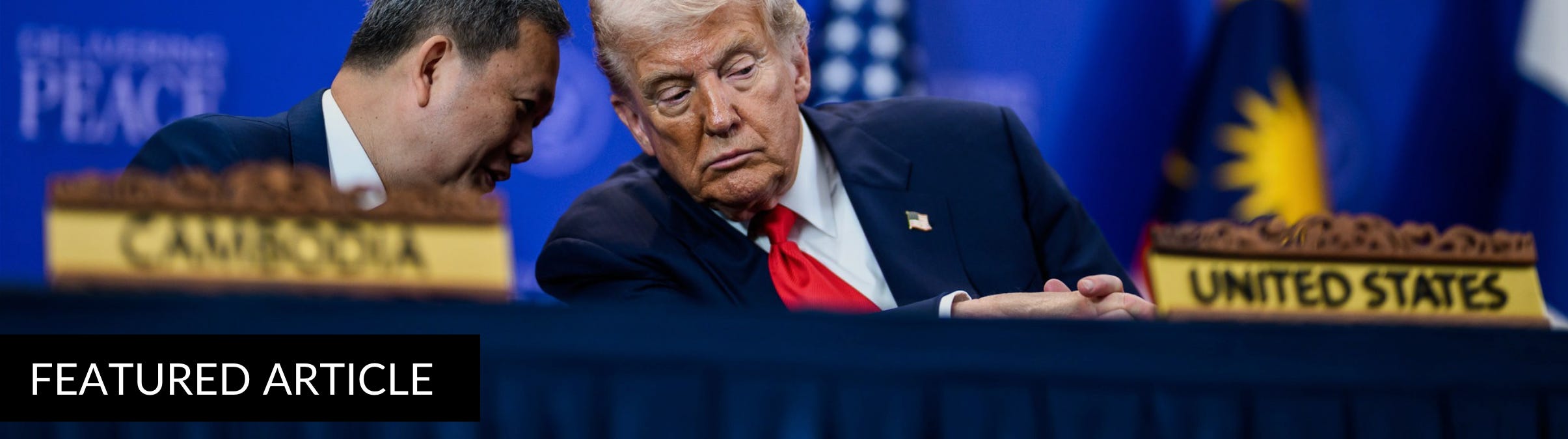
STRATEGIC AUTONOMY UNDER PRESSURE: CAMBODIA’S MULTI-GEARED HEDGING IN A POST-MULTILATERAL WORLD
Amid intensifying competition between major powers in Southeast Asia, Cambodia is experiencing growing pressure on its long-standing strategic hedging. Chandarith Neak and Chhay Lim argue that Cambodia pursues a “multi-geared” foreign policy approach, balancing relations with China, the US, and Vietnam to maximise economic and political flexibility. However, increasing geopolitical polarisation and the weakening of multilateral frameworks have made this balancing strategy more difficult to sustain, particularly as smaller states face mounting pressure to align more clearly with competing powers.
Cambodia’s external positioning is shaped not only by geopolitical pressures but also by domestic political and economic considerations. Chinese investment, infrastructure financing, and development assistance have become central to Cambodia’s economic strategy, while ties with Vietnam remain important due to deep historical, political, and security connections. At the same time, Phnom Penh continues to engage with the US and other regional partners in order to preserve diplomatic flexibility and avoid excessive dependence on any single actor. Cambodia’s hedging strategy relies on maintaining diversified partnerships across political, economic, and security domains rather than pursuing exclusive alignment with one major power.
Yet pressures have exposed the growing limits of Cambodia’s balancing strategy. As US–China rivalry intensifies and ASEAN’s collective influence weakens, Cambodia faces more difficulties in its strategic manoeuvring. Phnom Penh’s foreign policy is becoming more constrained by structural economic dependence, regional uncertainty, and competing external expectations. Although Cambodia continues to emphasise neutrality and strategic autonomy, preserving a genuinely flexible multi-geared hedging strategy is becoming more challenging in a post-multilateral environment.
STABILISED RISK: THAILAND’S PATRONAGE-TECHNOCRAT ALLIANCE UNDER THE 2026 OIL SHOCK
Amid economic disruptions following the 2026 oil shock, Thailand’s political system has demonstrated a capacity for stability rooted in the enduring alliance between patronage networks and technocratic governance. Apipol Sae-Tung argues that the energy crisis has reinforced an existing political order in which elites, business interests, and technocrats cooperate to manage economic risk and preserve regime continuity. Although rising fuel prices and inflationary pressures have intensified public dissatisfaction, Thailand’s governing institutions have responded through technocratic management rather than structural political reform.
This “patronage-technocrat alliance” has become a defining feature of Thailand’s contemporary governance. Political elites continue to rely on patronage networks to maintain electoral influence and social control, while technocratic actors provide the credibility and policy expertise necessary to manage financial instability and reassure investors. This enables the state to manage social pressures without fundamentally altering the underlying distribution of political power.
At the same time, this model of stabilised risk may deepen longer-term structural vulnerabilities. The energy crisis has exposed deeper vulnerabilities linked to volatile fuel imports, fiscal strain, and entrenched patronage networks, testing the limits of a political system designed more for continuity than for long-term adaptability.
CONSULTING SERVICES
At 9DASHLINE, we are your Indo-Pacific experts. We provide sharp and timely analysis on the complex geopolitical landscape of a region brimming with economic and strategic opportunities. Our bespoke consulting solutions empower you to make informed decisions that navigate this dynamic environment.
We welcome your enquiry.
The Navigator is produced by:
Dr Hunter Marston, Daniel McIntyre, Luana Correia, Dr Manali Kumar, and David MacSweeney.
SUBSCRIBE NOW
HELP US BY SHARING — THANK YOU!