

THE NAVIGATOR
FEBRUARY 2026

GREY-ZONE PRESSURE AND POLITICAL RECALIBRATION: LESSONS FROM THE INDO-PACIFIC FOR A HARDENING WORLD
By Dr. Manali Kumar, Executive Director
February underscored how the boundaries between war and peace are dissolving. As suspected Russian drones probed Polish airspace and grey-zone tactics crept further into Europe’s strategic rear, the continent was reminded that the battle space now extends well beyond Ukraine. Yet as this month’s brief argues, Europe is not confronting this challenge alone. Across the Indo-Pacific, states have already grappled with sustained drone incursions — from Taiwan’s outlying islands to Japan’s southern archipelago and the Philippine Sea — and have responded by clarifying red lines, investing in deterrence, and tightening partnerships. The lesson is stark: ambiguity invites escalation, while credible signalling restores stability.
Our regional review this month traces a wider pattern of hardening postures and political recalibration across the Indo-Pacific. In South Asia, Pakistan’s sweeping counteroffensives in Balochistan and renewed cross-border tensions highlight the fragility of internal and regional security, even as India doubles down on its ‘leading power’ ambitions through trade diplomacy and high-level strategic outreach. In Southeast Asia, electoral outcomes in Thailand and Indonesia’s new trade deal with Washington reveal shifting domestic coalitions amid intensifying great-power competition, while hearings at the International Criminal Court against former Philippine President Rodrigo Duterte reopen unresolved questions of accountability and democratic resilience. In East Asia, Japan’s decisive electoral mandate strengthens allied deterrence at a time of mounting pressure from Beijing, even as political manoeuvring in Taiwan and shifting rhetoric from Washington complicate cross-Strait dynamics.
Across the Pacific Islands, strategic competition continues to deepen beneath the surface — from critical minerals and digital infrastructure to policing agreements and climate diplomacy — as regional actors seek to balance development needs with sovereignty and security. Meanwhile, this month’s Best of 9DASHLINE explores how Bangladesh, Indonesia, and Japan are reconfiguring governance at home to navigate external uncertainty, asking how states can project power, preserve autonomy, and sustain legitimacy in a more fragmented order.
As the Indo-Pacific continues to shift, 9DASHLINE delivers the sharp, timely analysis you need to stay ahead of the curve.
Subscribe now.
GREY-ZONE DRONES: LESSONS FROM THE INDO-PACIFIC FOR EUROPE
By Thijs Stegeman, National Dong Hwa University
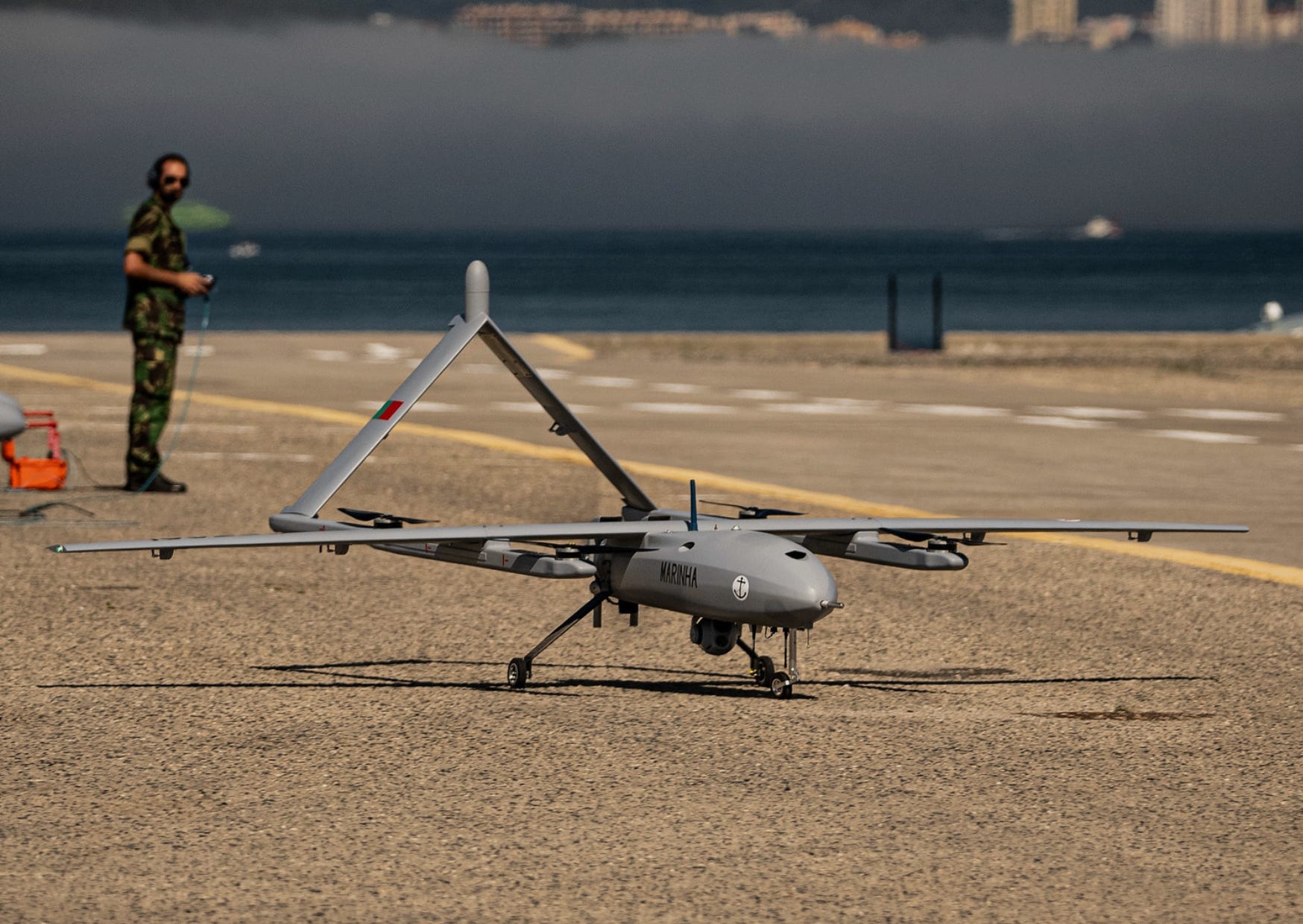
As Russia’s invasion of Ukraine enters its fifth year, Europe is discovering that the battlefield is no longer confined to Ukraine. In the fall of 2025, Europe was confronted with a series of intrusions by suspected Russian drones — over a dozen long-range combat-style unmanned aerial vehicles (UAVs) entering Polish airspace. Though apparently unarmed, the incidents marked an escalation and mirrored a pattern long familiar in the Indo-Pacific. Since 2022, China has used civilian and military drones to harass Taiwan’s outlying islands and probe disputed areas in the East and South China Seas. While Taiwan and Japan have responded by publicly clarifying red lines, Europe has hesitated.
The pattern first became visible in 2022, when civilian drones were repeatedly spotted above Kinmen Island, lying just two kilometres off the Chinese coast but administered by Taiwan. Footage showed a vlogger using his drone to drop food on the island, while another video captured Taiwanese soldiers throwing rocks at a drone. The incidents sparked public backlash in Taiwan and prompted a rapid policy response. Taiwan updated its rules of engagement, allowing even civilian drones to be shot down in restricted areas if they failed to respond to warning flares. In September 2022, a drone was downed for the first time, after which such incidents largely ceased.
China has since shifted toward military-grade UAVs. Combat drones have been repeatedly detected near Taiwan and around the disputed Senkaku/Diaoyu Islands, as well as near Japan’s southern island chain. Between April 2024 and March 2025, Japan scrambled fighter jets 23 times in response to Chinese military drones – more than in all previous years combined. In response, Tokyo publicly reinterpreted the Self-Defence Forces Law, allowing unmanned aircraft to be shot down even without an immediate threat to life. The new policy was formally adopted in June 2025, alongside accelerated procurement of Japan’s own UAVs.
However, the trend continues. In January 2026, a Chinese military UAV flew over Taiwanese territory for the first time, at the Pratas (Tungsha) Island in the South China Sea. Further south, Philippine fishermen have repeatedly encountered Chinese unmanned underwater vehicles mapping the seabed, including in territorial waters. Manila has responded by deepening cooperation with the US and Japan, improving maritime domain awareness, and hosting a US drone squadron for surveillance.
Despite the associated costs and different threat environments, Taiwan, Japan, and the Philippines have made the same strategic choice: drawing clear public lines, clarifying consequences, and backing them with investment and partnerships. In contrast, Europe’s response has been more hesitant. NATO launched Operation Eastern Sentry and the EU proposed a “drone wall,” but the former was temporary and the latter stalled by political infighting. Neither have there been clear public statements on how future incidents will be handled. After four years of war on the continent, Europe still hesitates to take deterrence seriously. It could learn from the Indo-Pacific.
Keep an eye on 9DASHLINE in March for an article discussing this topic in more depth.
ACROSS THE INDO-PACIFIC
South Asia
Pakistan faced a sharp escalation in militant violence in February. Coordinated gun and bomb attacks across Balochistan killed nearly 50 people and triggered a sweeping 40-hour counteroffensive in which security forces said they killed 145 militants. The banned Baloch Liberation Army claimed responsibility, while Islamabad accused India of backing the operation — a charge New Delhi denied. A subsequent week-long campaign, Operation Radd Al-Fitna, reportedly killed over 200 insurgents as Pakistan moved to reassert control over key districts.
Violence spilt beyond Balochistan. A suicide bombing at a Shi’ite mosque in Islamabad killed 32 people, with the Islamic State claiming responsibility. Cross-border tensions with Afghanistan also intensified after Pakistani airstrikes on militant targets were followed by exchanges of fire along the Torkham frontier, underscoring the fragility of recent de-escalation efforts.
Humanitarian pressures in Afghanistan continue to mount. The UN warned that mass returns — more than five million Afghans expelled from neighbouring states since late 2023 — are overwhelming an already strained aid system, compounding hunger risks amid shrinking international assistance and economic stagnation.
Following January’s FTA breakthrough with the European Union, India is seeking to expand its trade diplomacy, signalling interest in launching negotiations with Canada during Prime Minister Mark Carney’s visit this week. Talks to finalise an interim trade arrangement with the US have meanwhile stalled following a US Supreme Court ruling striking down global tariffs. The delay offers a reprieve to the Modi government after domestic critics warned the deal risked undermining sovereignty and undercutting the agriculture sector despite reducing the main tariff to 18 per cent.
On the global stage, Prime Minister Narendra Modi visited Israel to deepen strategic ties amid rising fears of a US-Iran conflict, reaffirming political support and security cooperation. Doubling down on its ‘leading power’ ambitions, India convened a major AI Impact Summit in New Delhi, drawing over 250,000 registered attendees, including tech leaders and at least 20 heads of state such as French President Emmanuel Macron and Brazilian President Lioz Inacio Lula da Silva. Two of India’s biggest conglomerates — Reliance and Adani — pledged a combined USD 210 million investment in domestic AI and Data infrastructure. Meanwhile, New Delhi is reportedly also weighing age-based restrictions on social media access, after bans in Australia, Denmark, and Spain.
Monarchist sentiment resurfaced ahead of Nepal’s March elections, with pro-crown rallies in Kathmandu highlighting persistent dissatisfaction with political instability. Former king Gyanendra Shah amplified the debate in a pre-election address, urging political consensus before proceeding with the vote — a proposal that has stirred constitutional concerns while underscoring the monarchy’s residual symbolic appeal.
In Bangladesh, the centre-right Bangladesh Nationalist Party (BNP) secured a landslide parliamentary majority, while an Islamist alliance led by Jamaat-e-Islami emerged as the principal opposition force, challenging the country’s traditional dynastic political order.
Relations with India continued to deteriorate amid New Delhi’s refusal to extradite Sheikh Hasina and reciprocal visa restrictions. Meanwhile, China has intensified diplomatic and investment outreach in Dhaka, positioning itself as an increasingly prominent external partner.
Sri Lanka’s Criminal Investigation Department arrested former intelligence chief Suresh Sallay under anti-terror legislation in connection with the 2019 Easter bombings, reopening politically sensitive questions about accountability for the attacks.
Security cooperation with the United States also deepened following a visit by Steve Koehler, commander of the US Pacific Fleet. The engagement highlights Washington’s growing strategic focus on Colombo’s maritime role in the Indo-Pacific, even as concerns persist over militarisation and human rights.
Southeast Asia
Thailand’s Bhumjaithai Party won elections on 8 February, surprising some observers after several nationwide polls showed the People’s Party with a clear lead. Bhumjaithai picked up 194 seats in the House of Representatives, with the People’s Party securing 116 seats and Pheu Thai in third with 76 seats. The party’s victory cements caretaker Prime Minister Anutin Charnvirakul’s leadership as prime minister, a position he has held since the collapse of the Pheu Thai Party in September 2025. Reports of irregularities and related inquiries submitted to the Election Commission have not slowed Anutin’s enthusiastic embrace of the election results. His party is already in talks with Pheu Thai and other smaller parties to form a coalition comprising a 251-seat majority in the 500-member house.
Indonesia and the United States announced the conclusion of a free trade deal just days prior to a US Supreme Court ruling which deemed President Trump’s tariffs illegal. Indonesia agreed to eliminate a number of barriers to US imports, particularly agricultural products, automotives, and pharmaceutical products. The deal maintains 19 per cent tariffs on Indonesian imports into the United States, while Indonesia agreed to purchase more than US $38 billion in US goods, as well as invest at least US $10 billion in US manufacturing and energy projects. In its announcement, the White House heralded “a NEW GOLDEN AGE for the US-Indonesian alliance”, though Washington and Jakarta do not have a formal alliance treaty. Separately, Indonesian President Prabowo Subianto attended the inauguration of President Trump’s Board of Peace in Washington, pledging to send 8,000 peacekeepers to Gaza to assist with stabilisation efforts.
Hearings began at the International Criminal Court on 23 February against former President of the Philippines Rodrigo Duterte, who is charged with crimes against humanity for his brutal drug war, which killed more than 12,000 civilians during his presidency (2016-2022). Separately, Duterte’s daughter, Vice President Sara Duterte, announced she would run for the 2028 presidency. VP Duterte is facing multiple impeachment inquiries in the House of Representatives. The heated dynastic rivalry between the Marcos and Duterte families shows no sign of slowing down in 2026.
East Asia
In Japan, Prime Minister Sanae Takaichi and her Liberal Democratic Party (LDP) secured a landslide, winning 316 of 465 seats — the first single-party two-thirds majority in the post-war era. Her victory was driven by voters seeking greater resilience amid an increasingly volatile neighbourhood, and showed that Beijing’s pressure campaign decisively backfired. With a supermajority behind her, Takaichi is now positioned to deepen economic and security reforms and strengthen allied deterrence. She will enter her 19 March meeting with President Trump with enhanced authority to shape the future of the Japan-US alliance. For a deeper examination of Takaichi’s ideological foundations and policy trajectory, read Federica Cidale’s December analysis on 9DASHLINE.
In South Korea, former President Yoon Suk-yeol was convicted of insurrection and sentenced to life imprisonment with labour over his failed December 2024 martial law bid. Some democracy activists criticised the ruling as too lenient and called for the death penalty, highlighting the deep polarisation in the country. Meanwhile, Seoul formally protested Japan’s “Takeshima Day” event — a government ceremony marking Japan’s claim to a cluster of disputed islands — a reminder that historical and territorial sensitivities continue to complicate the relationship even as Seoul and Tokyo expand strategic coordination.
In Taiwan, the opposition-led Kuomintang (KMT) agreed to send President Lai’s USD 40 billion special defence budget to committee review after blocking it more than 10 times. The shift followed pointed criticism from US lawmakers over the delay. It also complicates new KMT Chair Cheng Li-wun’s strategy of balancing relations with Washington and Beijing. The party participated in a KMT–CCP think tank forum in Beijing this month, while Vice-Chair Hsiao Hsu-tsen met with Wang Huning, the fourth-ranking member of the CCP Politburo Standing Committee, to discuss a potential meeting between Cheng and Xi Jinping next month.
Meanwhile, China imposed new export controls on high-tech materials and equipment targeting 40 Japanese entities it says are contributing to Japan’s “remilitarisation”, marking a further deterioration in bilateral ties since Takaichi’s “survival-threatening situation” remarks in November. PLA activity around Taiwan decreased during the Lunar New Year period. However, President Trump’s comments that he is “discussing” arms sales to Taiwan with Xi Jinping — appearing to depart from longstanding US policy — alongside the KMT’s more energised pro-China positioning, may reinforce perceptions in Beijing that cross-Strait dynamics are trending in its favour.
The Pacific
The Autonomous Bougainville Government (ABG) has reportedly signed a secret agreement with Bougainville Copper Limited to reopen the Panguna mine. The mine is estimated to hold an estimated 5.3 million metric tons of copper and over 19 million ounces of gold — resources valued at more than USD 80 billion. Changes to legislation enabled the ABG to assume direct control following a 36.4 per cent equity transfer from the Papua New Guinea government. Meanwhile, in Papua New Guinea, the Asian Development Bank has approved a $60.9 million grant to modernise urban water and sanitation services.
Despite reporting by ABC News, authorities in the Solomon Islands have denied that Chinese police have established a temporary facility in Honiara to provide tactical and internal security training. Japan recently hosted the Pacific Islands Defence Ministers Meeting in Tokyo, aiming to build a unified regional approach to maritime security and strengthen defence interoperability.
The US has sanctioned two senior officials from Palau and the Marshall Islands, banning them from entering the US, stemming from accusations of corruption leading to greater Chinese influence in the Pacific. Palau’s President used the Pacific Agenda Summit to lobby for expanded US private sector investment, while the Quad committed $20 million to upgrade Palau’s telecommunications with secure 5G infrastructure.
Supported by Starlink, the Marshall Islands has launched the Pacific’s first universal basic income pilot program to address economic hardship and climate displacement. In the Mariana Islands, autonomous uncrewed surface vehicles began a high-resolution seafloor mapping project. Meanwhile, US Senator Tom Cotton, citing national security, recently introduced legislation designed to end visa-free access for Chinese nationals to Guam and the CNMI.
Reports this month suggest the United States may keep AUKUS nuclear submarines under its control and deploy them to Australia. Following a request from Kiribati, the Australian Defence Forces delivered aid to one of its remote communities on Banaba Island. Meanwhile, Australian FM Penny Wong recently visited Samoa and Niue to formalise development and climate resilience partnerships. This included the signing of policing and cybersecurity agreements between Apia and Canberra designed to enhance data protection and domestic stability. The European Union has also announced funding for a regional digital media hub in Samoa to improve access to information.
Fiji and Tuvalu will host pre-COP31 climate meetings to centralise Pacific interests in global negotiations. Despite resistance from the United States, Vanuatu indicated it will continue to advance a UN resolution seeking a legal opinion on climate change obligations. Reports indicate that Fiji remains gripped by a HIV epidemic fuelled by social stigma, while the Minister for Home Affairs called for an inclusive regional security pact to address non-traditional threats.
Nauru is considering a constitutional amendment designed to change its official name to Naoero. Developments in New Caledonia have seen the French Senate recently endorse institutional reforms, though consensus between loyalist and pro-independence factions remains elusive.
New Zealand plans to abolish its Ministry for the Environment. In a separate development, it is deciding whether to grant the United States access to its citizens’ biometric data. Wellington’s Trade Minister reports that political support for an India FTA is nearing consensus.
Following the recent rift with Wellington, former Cook Islands PM Henry Puna has called for calm, respect, and the protection of the long-standing constitutional partnership with New Zealand. New Zealand undertook a tri-service (Navy, Army, Air Force) deployment supporting NZ agencies across the South-West Pacific. This included a visit by the Governor-General to Tokelau marking 100 years of New Zealand’s administration.
THE BEST OF 9DASHLINE
This month’s top reads explore how Indo-Pacific states are reconfiguring governance and strategy in response to emerging domestic political issues and a shifting regional order. In Bangladesh, a move toward diversified, networked security reflects an effort to maximise strategic autonomy amid great-power competition. In Indonesia, welfare expansion under Prabowo reveals how domestic governance is being reshaped through civil-military fusion and closer alignment with China. Meanwhile, in Japan, the politicisation and misinterpretation of crime data highlight how narratives around immigration can influence social cohesion.
Together, these articles examine how states are navigating uncertainty and the need for stronger positioning without eroding flexibility or trust. Whether through networked security partnerships, centralised welfare delivery, or data-driven political narratives, they question how states sustain legitimacy and autonomy in projecting power.

BANGLADESH’S DEFENCE DIVERSIFICATION AND PIVOT TO NETWORKED SECURITY
Amid a shifting Indo-Pacific security landscape, Bangladesh is pursuing a strategic reset in its defence and foreign policy following the fall of Sheikh Hasina’s government. Taufiq E. Faruque and Rubiat Saimum examine how Dhaka is moving away from an India-centric security posture toward a diversified, networked approach aimed at maximising strategic autonomy.
The authors outline how the interim administration led by Muhammad Yunus is expanding defence partnerships across multiple vectors, including China, Europe, Turkey, Japan, and Pakistan. This diversification, paired with a modernisation of military capabilities and the development of domestic defence industries, reflects a shift to “network-centric statecraft”, where Bangladesh embeds itself in overlapping security, economic, and institutional networks rather than relying on a single dominant partner.
While this strategy enhances flexibility and reduces dependency, Bangladesh faces challenges in translating it into durable strategic autonomy. Managing geopolitical tensions, sustaining domestic defence capacity, and institutionalising this networked approach beyond political transitions will determine whether Bangladesh can emerge as a globally connected security actor.
PRABOWO’S PRESIDENCY: MEALS, POWER, AND CHINA
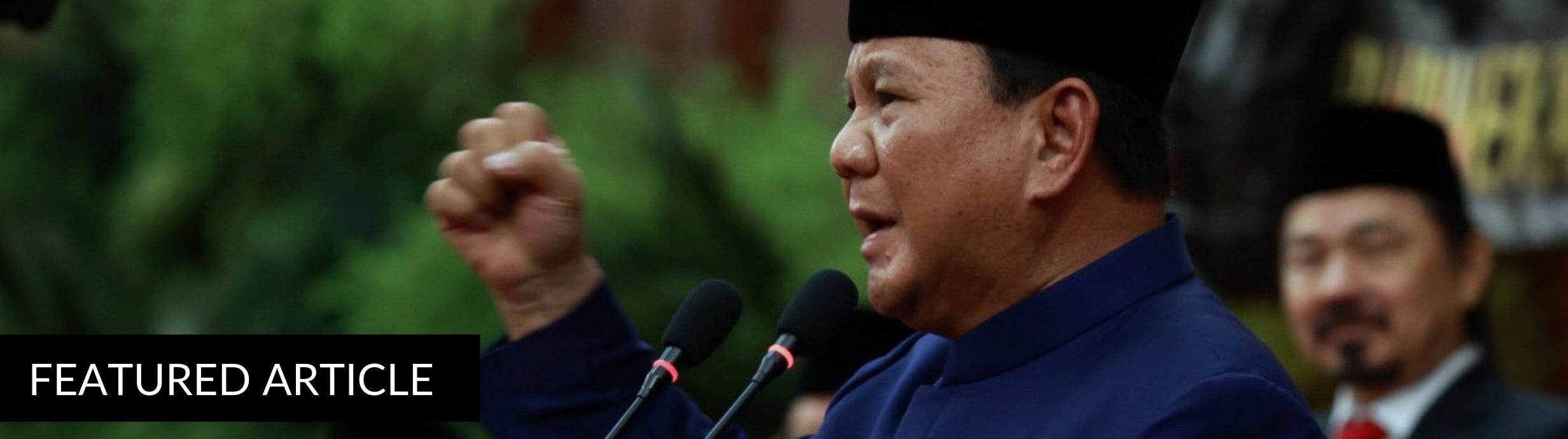
During Indonesia’s political transition under Subianto Prabowo, a national school meal programme is emerging as both a social policy and a tool of political consolidation. Peyson Hunt and Nathaniel Schochet explore how this initiative reflects a broader transformation in governance, where welfare delivery is increasingly intertwined with military structures and executive authority.
Hunt and Schochet explain how the programme relies heavily on the Indonesian Armed Forces, elevating the military’s domestic role and embedding civil-military fusion into everyday governance. This approach not only compensates for bureaucratic limitations but also strengthens centralised control. These internal dynamics are paired with a pragmatic external strategy: Jakarta is deepening engagement with China as a source of financing, infrastructure expertise, and policy models for large-scale state-led programmes. Cooperation spans food security, logistics, and industrial development, reinforcing a governance style that privileges scale, speed, and state coordination.
While Prabowo’s model may deliver short-term policy effectiveness and political stability, it raises longer-term questions about democratic governance and strategic autonomy. As civil-military fusion deepens and external ties — particularly with China — expand, Indonesia risks entrenching a governance model that concentrates power domestically while constraining its flexibility in navigating great-power competition.
INTERPRETING CRIME DATA IN JAPAN’S IMMIGRATION DEBATE
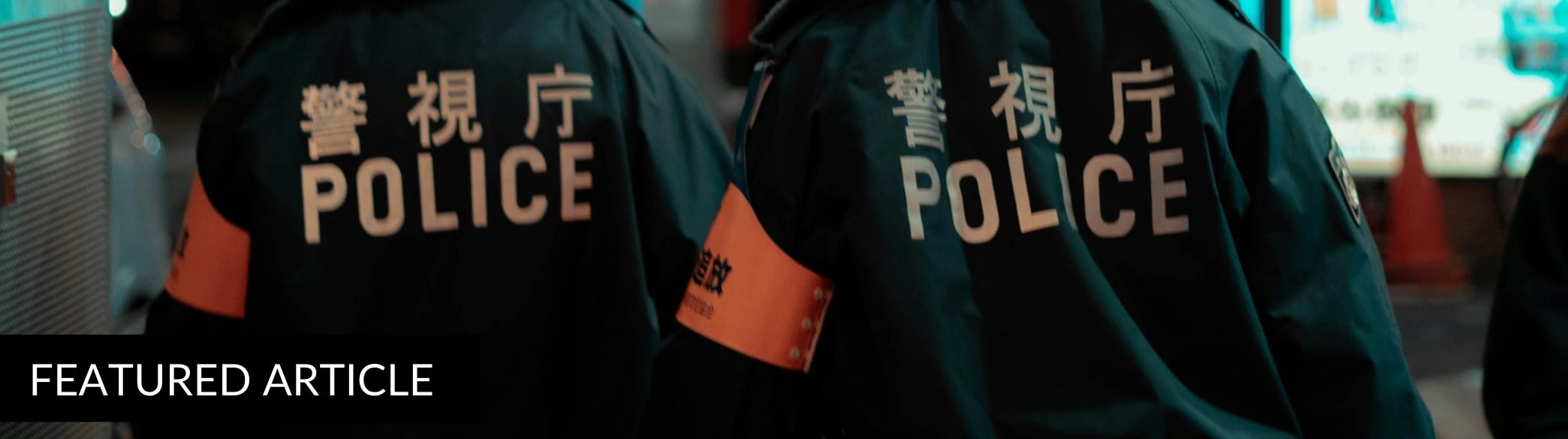
Amid intensifying political debate over immigration in Japan, crime statistics have become a central — and often misleading — tool in shaping public perceptions of foreign residents. Peter Chai examines how rising concern over social order, amplified by electoral dynamics and rhetoric, has elevated “foreigner crime” into a defining issue in Japanese politics.
Chai explains that while crime has modestly increased in the post-pandemic period, this trend applies to both Japanese and non-Japanese populations and remains far below historical peaks. However, official narratives frequently conflate different categories — such as tourists versus long-term residents, or criminal offences versus immigration violations — while overlooking structural factors like selective policing and data limitations. These distortions, combined with heightened public anxiety, risk exaggerating the role of foreign nationals in Japan’s overall crime landscape.
Beyond being a statistical issue, misinterpreting crime data creates political tensions by reinforcing restrictive immigration policies despite Japan’s growing reliance on foreign labour. Without more precise data use and clearer distinctions in the crime debate, Japan risks fuelling social division and xenophobia, undermining effective policymaking and the social cohesion needed to sustain its ageing economy.
CONSULTING SERVICES
At 9DASHLINE, we are your Indo-Pacific experts. We provide sharp and timely analysis on the complex geopolitical landscape of a region brimming with economic and strategic opportunities. Our bespoke consulting solutions empower you to make informed decisions that navigate this dynamic environment.
We welcome your enquiry.
The Navigator is produced by:
Dr Hunter Marston, Daniel McIntyre, Luana Correia, Dr Manali Kumar, and David MacSweeney.
SUBSCRIBE NOW
HELP US BY SHARING — THANK YOU!